






What's Happening?
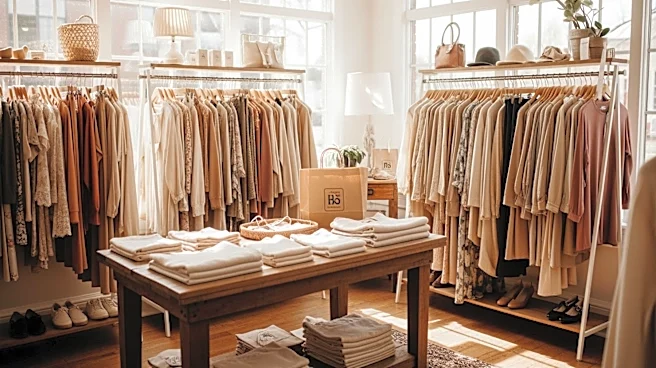
Zara has launched a new collaborative capsule collection with Puerto Rican artist Bad Bunny, named 'Benito Antonio.' This collection, which includes 150 pieces, is inspired by Bad Bunny's personal style and features a Caribbean color palette, oversized
patterns, and reinterpretations of traditional menswear. The collection is genderless, designed for both men's and women's wardrobes, and is part of Zara's strategy to position itself as a 'fashion house for everyone.' The collaboration marks a significant shift in Zara's approach, emphasizing co-creation with leading artists. The collection was first previewed during Bad Bunny's Super Bowl halftime show and the Met Gala, and is now available globally in Zara stores and online.
Why It's Important?
This collaboration is significant as it represents Zara's strategic pivot towards inclusivity and co-creation with global cultural figures. By partnering with Bad Bunny, Zara taps into the artist's broad appeal and influence, particularly among younger, fashion-forward consumers. This move aligns with Zara's goal to become a brand that not only sells fashion but also collaborates with artists to create unique, culturally resonant collections. The genderless nature of the collection reflects a growing trend in the fashion industry towards inclusivity and breaking traditional gender norms. This could potentially expand Zara's customer base and enhance its brand image as a leader in innovative fashion.
What's Next?
Following the launch, Zara is likely to continue exploring similar collaborations with other influential figures in design, culture, and art. This strategy could lead to more diverse and culturally significant collections, further solidifying Zara's position in the global fashion market. The success of this collection may also encourage other fashion brands to pursue similar partnerships, potentially reshaping industry standards around collaboration and inclusivity. Additionally, consumer response to this collection will be closely watched, as it could influence future design and marketing strategies for Zara and its competitors.