


What's Happening?
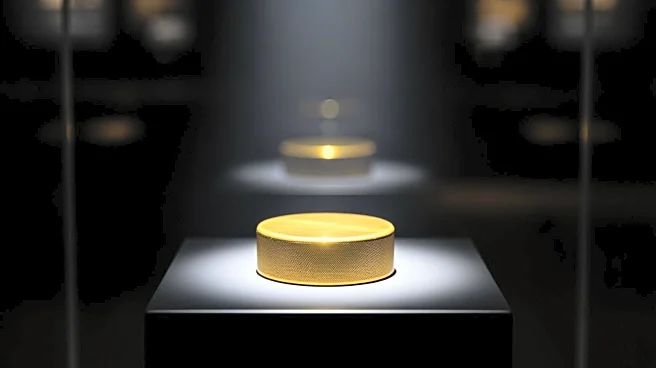
Jack Hughes, a prominent USA hockey player, has publicly expressed his dissatisfaction with the Hockey Hall of Fame's decision to retain the puck he used to score the golden goal at the 2026 Milan Cortina Olympics. The puck, which was instrumental in Team
USA's overtime victory against Canada, was secured and authenticated by the International Ice Hockey Federation and the Hall of Fame shortly after the game. Despite Hughes' claims and his description of the situation as 'bulls--t,' the Hall of Fame, represented by curator Philip Pritchard, maintains that Hughes has no ownership rights to the puck. Pritchard emphasized that the puck was never Hughes' to own and that it has been officially donated to the Hall of Fame, complete with a paper trail and signed documentation.
Why It's Important?
The dispute over the ownership of the golden goal puck highlights the complexities involved in the management and ownership of sports memorabilia. This situation underscores the importance of clear agreements and documentation in the transfer and ownership of significant sports artifacts. For the Hockey Hall of Fame, maintaining the integrity and authenticity of its collection is crucial, as it serves as a custodian of hockey history. For athletes like Hughes, the emotional and symbolic value of such memorabilia can be significant, leading to potential conflicts. This incident may prompt discussions within the sports community about the rights of athletes to retain personal memorabilia from significant events.
What's Next?
While the Hockey Hall of Fame has made its stance clear, the public nature of Hughes' comments may lead to further discussions or negotiations. It remains to be seen if Hughes will pursue any legal avenues to reclaim the puck or if the Hall of Fame will offer any form of compromise. The situation could also lead to broader discussions within the sports community about the rights of athletes to retain personal memorabilia from significant events. Stakeholders such as sports organizations, legal experts, and memorabilia collectors may weigh in on the implications of this case.