


What's Happening?
Digital PCR (dPCR) technology is gaining traction as a powerful tool in life sciences, offering high precision and sensitivity for nucleic acid quantification and rare mutation detection. METHYS Dx, a company specializing in liquid biopsies for cancer
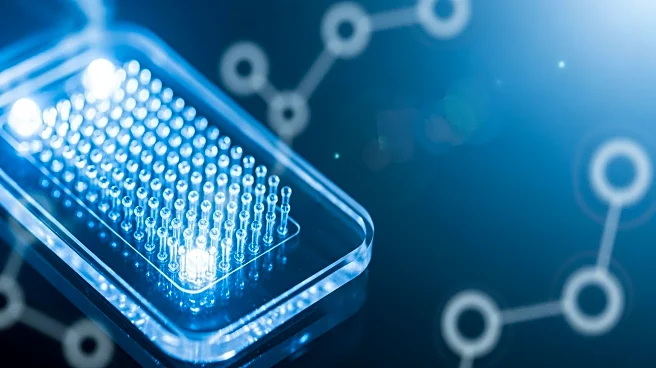
monitoring, is at the forefront of applying dPCR in clinical settings. The technology's ability to partition samples into individual DNA fragments allows for independent amplification, making it ideal for detecting low-prevalence variants. Recent advancements include increased multiplexing capabilities and improved reagent performance, enhancing the technology's applicability in various fields, including oncology and environmental monitoring.
Why It's Important?
The development of dPCR technology is crucial for advancing precision medicine, particularly in cancer research. Its high sensitivity and reproducibility make it a valuable tool for detecting rare genetic mutations, which can inform treatment decisions and improve patient outcomes. The technology's ability to provide absolute quantification without calibration curves also enhances its reliability across different laboratories. As dPCR becomes more accessible, it could revolutionize diagnostic practices, enabling more accurate and timely detection of diseases. This could lead to significant improvements in personalized medicine and public health.
What's Next?
The future of dPCR looks promising, with ongoing developments aimed at increasing its accessibility and reducing costs. As the technology becomes more integrated into clinical laboratories, it is expected to expand its applications beyond oncology to other areas such as infectious disease monitoring and environmental testing. Efforts to standardize data analysis and reporting will further facilitate its adoption. Companies like METHYS Dx are likely to continue exploring new biomarkers and applications for dPCR, potentially leading to breakthroughs in disease detection and management.