




What's Happening?
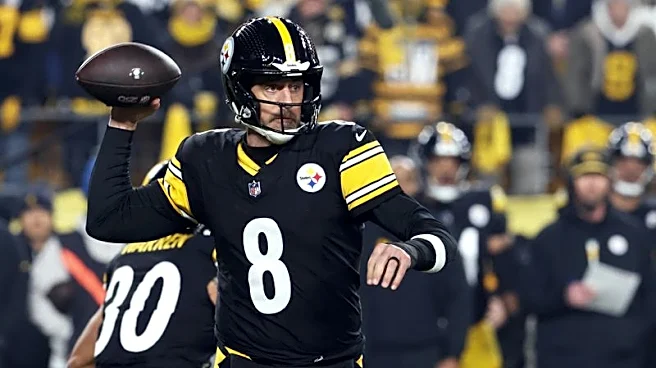
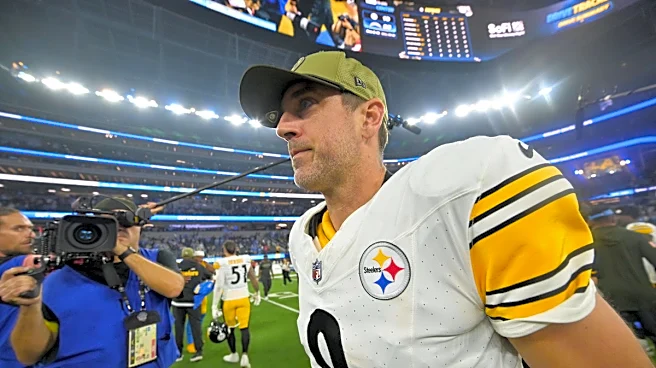
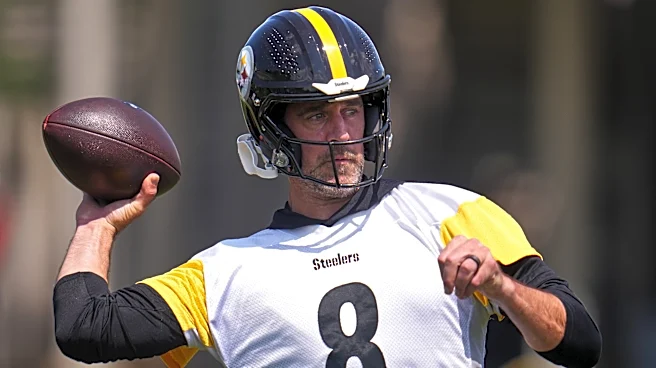
Aaron Rodgers has announced his intention to retire following the 2026 NFL season, marking the end of his 22-year career. Currently with the Pittsburgh Steelers, Rodgers confirmed his decision during a press conference, citing the recent hiring of head
coach Mike McCarthy as a significant factor in his choice to return for one final season. Rodgers and McCarthy previously worked together for 13 seasons with the Green Bay Packers, achieving a Super Bowl victory in 2011. The decision to retire comes after Rodgers signed a one-year contract extension with the Steelers, a move influenced by his respect for former head coach Mike Tomlin, who recently stepped down.
Why It's Important?
Rodgers' retirement marks the conclusion of a storied career that has significantly impacted the NFL landscape. His decision to play one more season under McCarthy could provide the Steelers with a strategic advantage, leveraging their past successful partnership. Rodgers' departure will also prompt the Steelers to consider long-term quarterback solutions, potentially affecting their draft and trade strategies. For the NFL, Rodgers' retirement signifies the end of an era, as he has been a prominent figure in the league, influencing both on-field play and off-field dynamics. His career achievements and leadership have set a high standard for future quarterbacks.
What's Next?
Following Rodgers' retirement, the Steelers will need to address their quarterback succession plan, which could involve developing current roster players or seeking new talent through drafts or trades. The team's performance in the upcoming season will be closely watched, as it may influence their strategic decisions moving forward. Additionally, Rodgers' retirement could spark discussions about his legacy and potential induction into the Pro Football Hall of Fame. The NFL community will likely celebrate his contributions to the sport, while fans and analysts speculate on the future of the Steelers and the league's quarterback landscape.