
What's Happening?
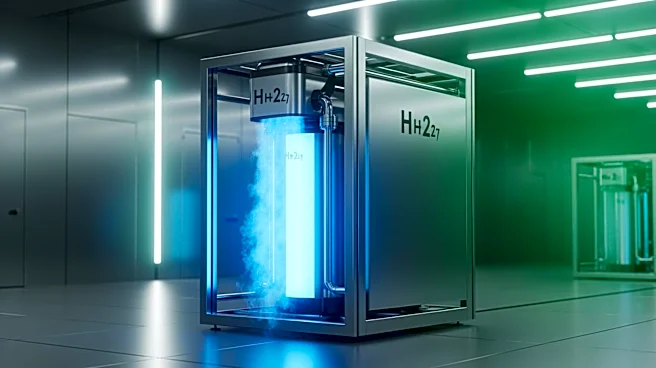
Researchers at Kyushu University in Japan have discovered a novel method for producing hydrogen gas using a simple mixture of iron ions, sodium hydroxide, and methanol, activated by UV light. This process,
known as alcohol dehydrogenation, releases hydrogen stored in alcohols like methanol. The discovery was made during a control experiment, which unexpectedly resulted in a significant release of hydrogen gas. The method is notable for its simplicity and cost-effectiveness, as it utilizes iron, a common and inexpensive element, instead of rare and costly metals typically used in high-performance catalysts. The researchers are now focused on optimizing the process to enhance its efficiency and sustainability.
Why It's Important?
Hydrogen is a clean fuel that emits no carbon dioxide during use, making it a crucial component in efforts to reduce carbon emissions and combat climate change. However, current hydrogen production methods are often tied to fossil fuels, limiting their environmental benefits. The new iron-based method offers a sustainable alternative, potentially decoupling hydrogen generation from carbon-intensive energy sources. This breakthrough could lead to more accessible and affordable hydrogen production, benefiting industries and consumers alike. Additionally, the simplicity of the process may inspire educational and hobbyist interest, fostering a broader engagement with scientific research and innovation.
What's Next?
The research team is working to understand the molecular-level mechanisms of the reaction to further optimize the process. They aim to improve the catalytic activity for hydrogen generation from various substrates, including other alcohols and biomass materials. As the method is refined, it could pave the way for widespread adoption of sustainable hydrogen technologies. The potential for this method to be replicated in educational settings may also encourage future scientific exploration and innovation in the field of renewable energy.