


What's Happening?
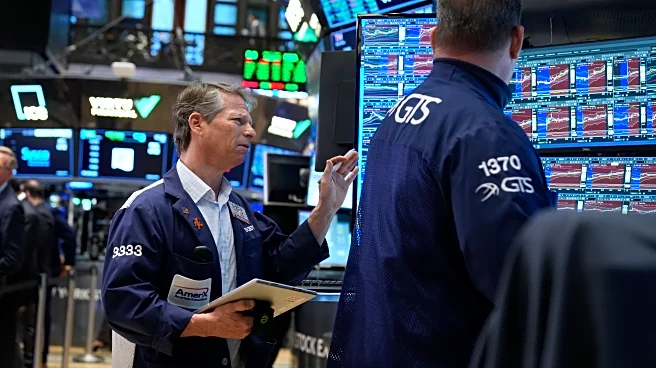
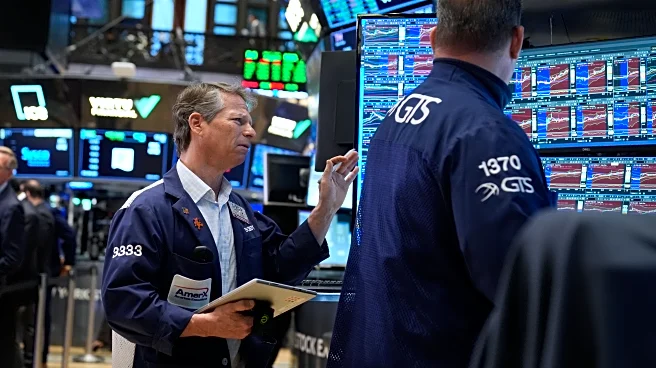
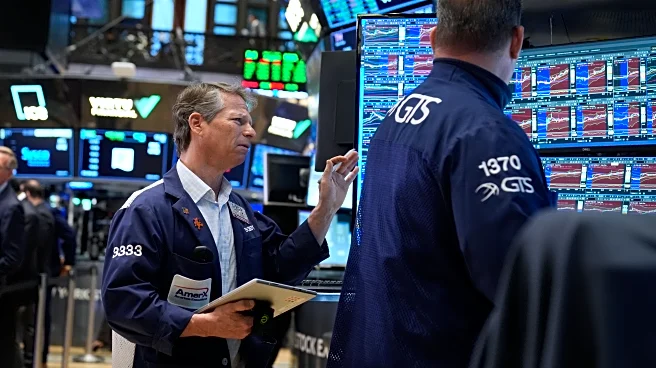
The U.S. stock market is experiencing a five-week losing streak, with the S&P 500 down 9% from its peak two months ago. This decline is driven by ongoing geopolitical tensions, particularly the conflict involving Iran, which has disrupted oil shipping
routes and increased crude prices. The market's volatility is further compounded by rising Treasury yields and concerns over stagflation. Investors are cautious, as the potential for a rapid de-escalation of the conflict remains uncertain. The market's current trajectory mirrors past patterns of gradual declines followed by sudden corrections, raising questions about the potential for a relief rally.
Why It's Important?
The current market conditions highlight the interconnectedness of geopolitical events and economic stability. The conflict's impact on oil prices and inflation poses risks to consumer spending and economic growth, affecting various sectors beyond the stock market. The situation underscores the challenges investors face in navigating market volatility and assessing risk-reward scenarios. The potential for a market correction or rally depends on geopolitical developments and economic indicators, making it crucial for investors to stay informed and adaptable. The broader implications for financial markets and economic policy could influence investment strategies and regulatory decisions.
What's Next?
As the geopolitical situation evolves, investors and analysts will closely monitor developments for signs of stabilization or further disruptions. The potential for a resolution to the conflict could lead to a market rebound, but the timing and likelihood remain uncertain. Financial institutions and policymakers may need to reassess strategies to address the economic impact of rising oil prices and inflation. The market's response to these challenges will shape investment trends and economic forecasts in the coming months.