



What's Happening?
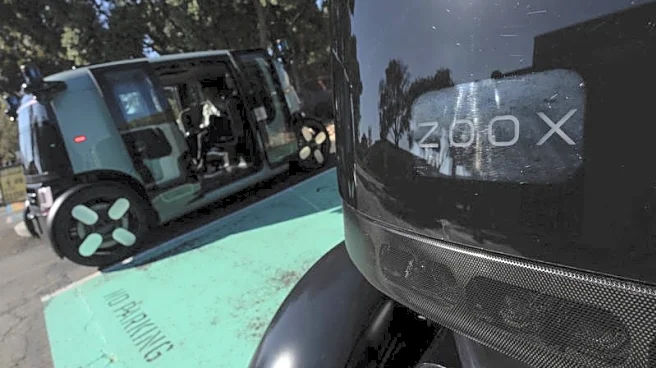
Amazon's Zoox has announced a partnership with Uber to integrate its self-driving robotaxis into the Uber app, starting in Las Vegas this summer. This collaboration marks Zoox's first third-party platform partnership and aims to expand its reach in the growing
robotaxi market. The partnership will extend to Los Angeles next year, with Zoox continuing to offer rides through its own app as well. Zoox, acquired by Amazon in 2020, is seeking federal approval to commercially deploy its robotaxis, which lack traditional steering wheels and pedals. The National Highway Traffic Safety Administration (NHTSA) is currently reviewing Zoox's application for exemptions from certain safety standards.
Why It's Important?
This partnership between Zoox and Uber is a significant development in the autonomous vehicle industry, highlighting the growing confidence in self-driving technology. By leveraging Uber's platform, Zoox can potentially increase its market presence and utilization rates, offering a new transportation option for consumers. The collaboration also underscores the competitive landscape of the robotaxi market, with companies like Waymo and Baidu expanding their services. For Uber, this partnership aligns with its strategy to integrate autonomous vehicles into its platform, enhancing its service offerings and potentially reducing operational costs. The success of this initiative could influence the future of urban transportation and the adoption of autonomous vehicles.
What's Next?
Zoox is awaiting federal approval to commercially deploy its robotaxis, which is a critical step for the partnership's success. The NHTSA's decision on Zoox's exemption application will determine the timeline for the commercial launch. Meanwhile, Uber and Zoox will continue to prepare for the integration of robotaxis into the Uber app, focusing on operational logistics and customer experience. The partnership's progress will be closely watched by industry stakeholders, as it could set a precedent for future collaborations between autonomous vehicle companies and rideshare platforms. Public and regulatory responses will also play a crucial role in shaping the trajectory of this initiative.