



What's Happening?
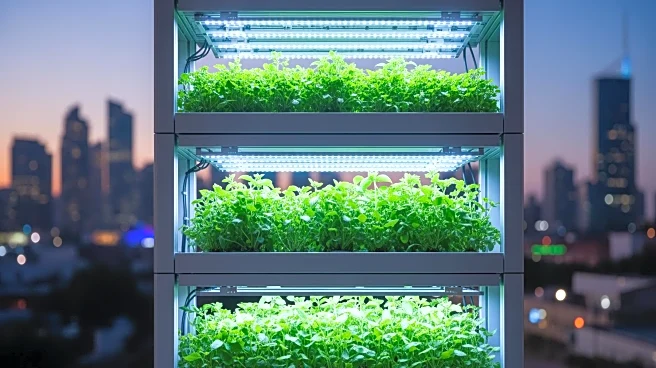
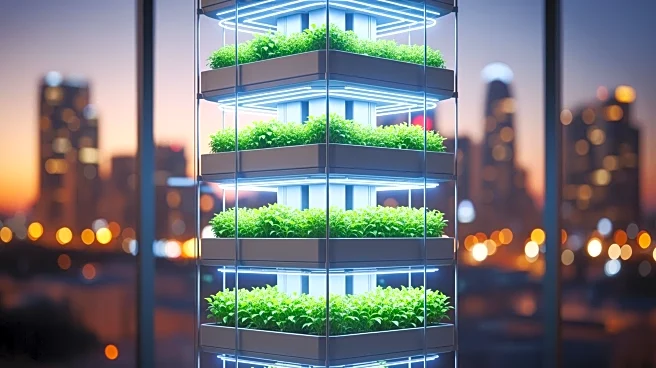
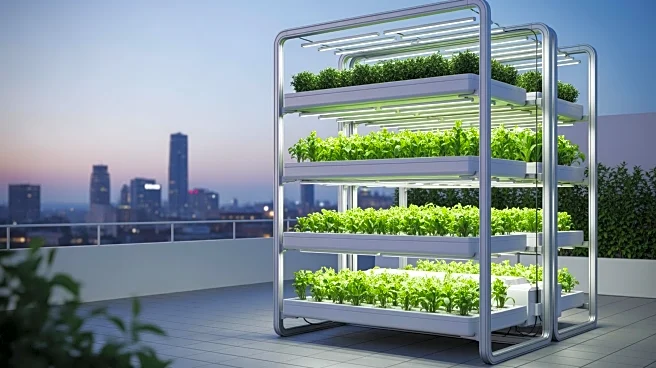
The global vertical farming market is expected to grow significantly, with projections indicating an increase from $8 billion in 2025 to $39.7 billion by 2032. This growth is driven by urbanization, demand for sustainable produce, and technological advancements. Vertical farming involves growing crops in stacked layers using water-based systems instead of soil. North America, particularly the U.S. and Canada, is leading this trend due to high urbanization rates and the demand for pesticide-free produce. The Asia-Pacific region is also experiencing rapid growth, supported by government initiatives in countries like Singapore, Japan, China, and India. Hydroponic farming is currently the most popular method, but aeroponics is gaining traction due to its
efficiency and flavor benefits.
Why It's Important?
The expansion of vertical farming represents a significant shift in agricultural practices, offering a sustainable solution to food production challenges in urban areas. This method reduces the need for large tracts of farmland, making it ideal for cities where space is limited and real estate costs are high. The growth of this market could lead to increased food security and reduced environmental impact by minimizing the use of pesticides and fertilizers. Additionally, the rise of vertical farming could stimulate economic growth by creating new jobs in urban agriculture and related industries.
What's Next?
As the vertical farming market continues to expand, further technological innovations are expected to enhance efficiency and crop diversity. The industry may face challenges in scaling up operations and expanding the range of crops that can be economically grown in vertical farms. Continued investment in research and development will be crucial to overcoming these barriers and ensuring the long-term viability of vertical farming as a mainstream agricultural practice.