
What's Happening?
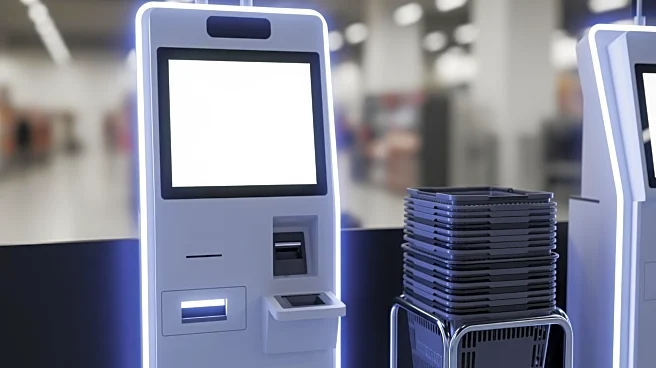
The self-checkout market in retail is experiencing significant growth, driven by the need for improved in-store efficiency, reduced personnel costs, and enhanced accuracy. Self-checkout systems, also known
as self-service checkouts, allow customers to complete purchases without traditional staffed checkouts. The rising cost of retail space and increasing consumer lines are pushing retailers to adopt these technologies. Additionally, the lack of skilled personnel in emerging markets and rising labor costs are contributing to the market's expansion. Retailers are increasingly incorporating technologies like IoT and cloud computing to improve the shopping experience. North America, particularly the U.S. and Canada, is a major market for self-checkout systems due to its rapid adoption of new technologies.
Why It's Important?
The adoption of self-checkout systems is reshaping the retail landscape by reducing dependency on human cashiers and enhancing customer experience through faster checkouts. This shift is crucial for retailers facing labor shortages and rising operational costs. The technology also aligns with consumer preferences for contactless and mobile payments, which have gained popularity. However, the transition poses challenges, such as potential job losses in the retail sector and the need for retailers to invest in technology infrastructure. The growth of self-checkout systems reflects broader trends in digital transformation and automation in retail, impacting how businesses operate and interact with customers.
What's Next?
As self-checkout technology continues to evolve, retailers may further integrate advanced technologies like artificial intelligence to enhance security and efficiency. The focus will likely be on improving user interfaces and reducing theft, a common concern with self-checkout systems. Retailers might also explore partnerships with technology providers to develop more sophisticated systems. The market is expected to grow, with North America leading the way, followed by significant adoption in Asia Pacific. Retailers will need to balance the benefits of self-checkout systems with potential drawbacks, such as increased theft and the need for customer education.