







What's Happening?
Researchers from Lancaster University have identified a new form of dark tourism emerging in online spaces known as the 'Backrooms.' Unlike traditional dark tourism, which involves visiting physical sites associated with death or tragedy, this new phenomenon
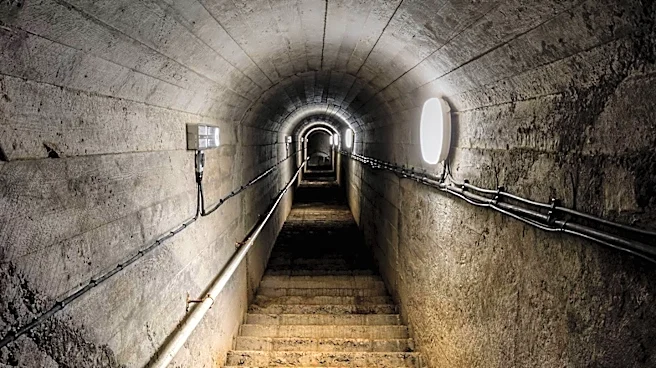
occurs entirely online. The 'Backrooms' are described as mysterious, empty digital environments that resemble uncharted office blocks, basements, and corridors. These spaces are collectively built and explored by a community of online 'legend-trippers' who share videos, stories, and creative content. The study, co-authored by Dr. Sophie James and Professor James Cronin, highlights how these digital environments offer immersive and unsettling experiences that feel meaningful despite their lack of physical presence. The research suggests that these online spaces are reshaping how people experience fear, curiosity, and belonging.
Why It's Important?
The emergence of 'Backrooms' as a form of dark tourism highlights the evolving nature of digital culture and its impact on human experiences. This shift from physical to digital spaces reflects broader changes in how people seek intense emotional experiences. The study's findings suggest that the internet is becoming a destination in its own right, offering participatory and self-contained experiences that challenge traditional notions of tourism. This development could have significant implications for the tourism industry, as it expands the concept of destinations beyond geographical boundaries. Additionally, the growing cultural attention around the 'Backrooms,' including an upcoming film by A24, indicates that these digital spaces are moving into the mainstream, potentially influencing how future generations engage with digital environments.
What's Next?
As the concept of 'Backrooms' gains popularity, it is likely to attract more attention from both cultural and academic circles. The upcoming film by A24 could further propel these digital spaces into the mainstream, sparking discussions about the nature of digital experiences and their impact on society. Researchers may continue to explore the implications of these online environments, particularly in terms of how they influence human behavior and perceptions of reality. The tourism industry might also consider how to integrate or respond to these digital experiences, potentially leading to new forms of virtual tourism offerings.
Beyond the Headlines
The rise of 'Backrooms' as a form of dark tourism raises questions about the ethical and psychological implications of engaging with unsettling digital environments. As people increasingly seek out these experiences, there may be concerns about the potential for desensitization to fear and ambiguity. Additionally, the anonymity and lack of regulation in these online spaces could pose challenges in terms of ensuring user safety and well-being. The phenomenon also highlights the growing intersection between digital culture and traditional tourism, prompting a reevaluation of what it means to explore and experience new places in a digitally mediated world.