




What's Happening?
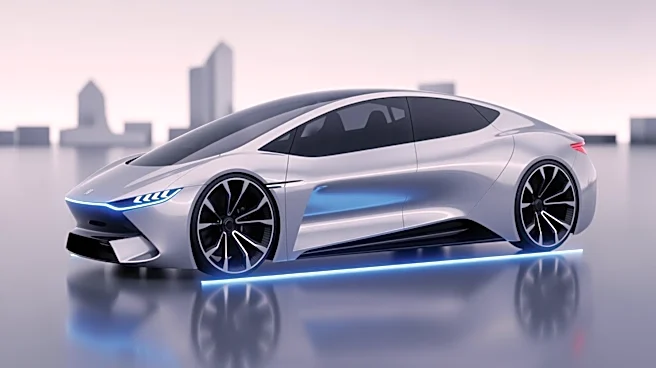
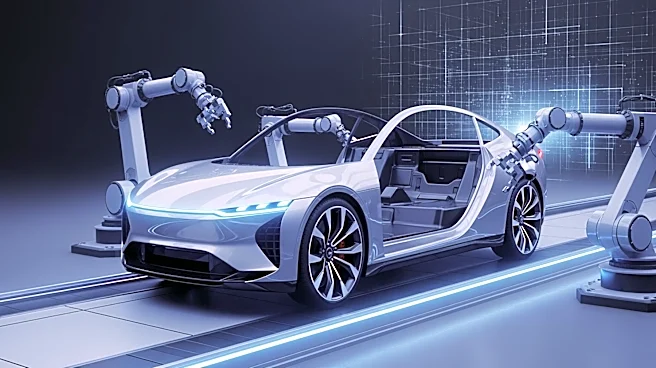
Tesla has announced the mass production of its Cybercab, an autonomous vehicle without traditional driver controls, at its Gigafactory in Texas. This development marks a significant milestone for Tesla's autonomous vehicle program. The Cybercab, featuring
a minimalist interior with no steering wheel or pedals, is set to join Tesla's expanding Robotaxi network. Tesla's Vice President of Vehicle Engineering, Lars Moravy, confirmed that the Cybercab is not subject to the U.S. National Highway Traffic Safety Administration's 2,500-vehicle-per-year limit for autonomous vehicles, as Tesla is self-certifying the vehicle under the Federal Motor Vehicle Safety Standards.
Why It's Important?
Tesla's move to mass-produce the Cybercab without regulatory constraints represents a major advancement in the autonomous vehicle industry. By self-certifying the Cybercab, Tesla is setting a precedent for other manufacturers seeking to deploy autonomous vehicles at scale. This development could accelerate the adoption of autonomous vehicles and reshape urban transportation, potentially reducing traffic congestion and emissions. Tesla's focus on autonomous technology aligns with its broader strategy to lead the transition to sustainable energy and transportation solutions.
What's Next?
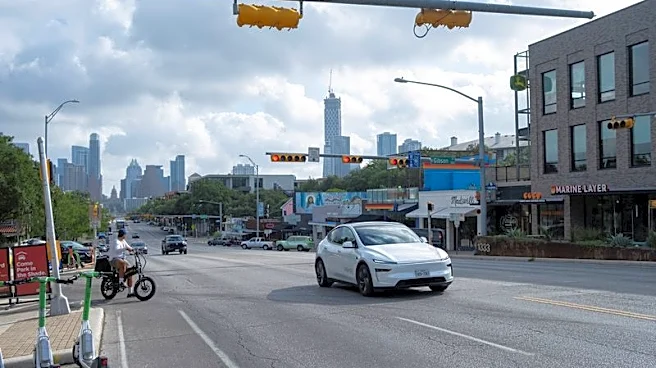
With the production of the Cybercab underway, Tesla plans to integrate these vehicles into its Robotaxi network, initially expanding services in Dallas and Houston. The company is likely to continue refining its autonomous driving technology and explore new markets for its Robotaxi service. Regulatory developments and public acceptance of autonomous vehicles will play a crucial role in Tesla's future expansion plans. As Tesla advances its autonomous vehicle capabilities, other automakers may follow suit, leading to increased competition and innovation in the industry.