



What's Happening?
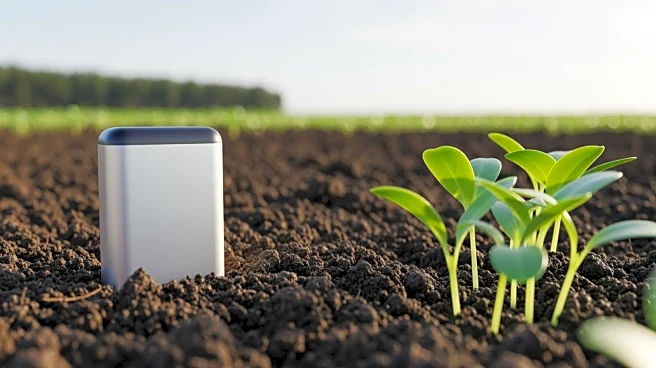
The Agriculture Sensors Market is anticipated to grow significantly, reaching a valuation of $5,659.47 million by 2032, according to a report by DataM Intelligence. This growth is driven by the increasing adoption of sensor technologies in agriculture, which are used to monitor soil conditions, weather patterns, crop health, and livestock activity. These sensors facilitate data-driven farming, enhancing resource efficiency, optimizing yields, and reducing environmental impact. Recent developments in the U.S. include the launch of advanced environmental sensors by SUCH, aimed at optimizing irrigation amid climate challenges, and the acquisition of Highline Technologies by Tempus AI to integrate AI and data analytics with agriculture sensor technologies.
The market is expected to grow at a compound annual growth rate (CAGR) of 11.70% from 2025 to 2032.
Why It's Important?
The expansion of the Agriculture Sensors Market is crucial for the advancement of precision agriculture, which aims to increase productivity while minimizing environmental impact. By providing real-time data, these sensors enable farmers to make informed decisions, leading to better resource management and higher crop yields. This technological integration is particularly important in the face of climate change, as it helps farmers adapt to changing weather patterns and optimize water usage. The growth of this market also signifies a shift towards more sustainable farming practices, which could have long-term benefits for food security and environmental conservation.
What's Next?
As the Agriculture Sensors Market continues to grow, further integration of AI and data analytics is expected to enhance the capabilities of these technologies. This could lead to more sophisticated predictive farming insights, allowing for even greater efficiency and productivity. Additionally, partnerships between sensor technology companies and major equipment manufacturers are likely to increase, embedding smart sensors into existing farm machinery. This integration will support real-time data collection and analysis, further advancing precision agriculture practices.