





What's Happening?
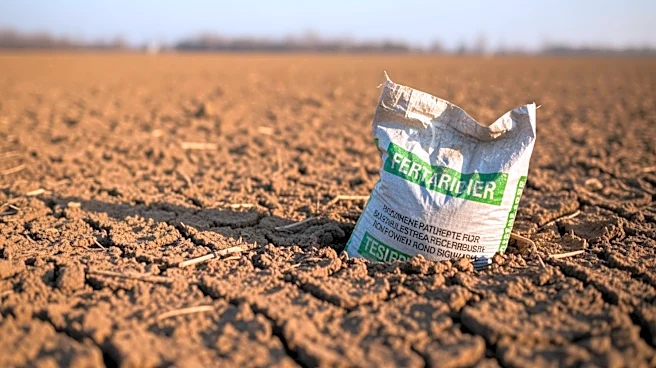
The ongoing conflict in Iran has led to a significant increase in fertilizer prices, severely impacting American farmers. A survey by the American Farm Bureau Federation reveals that 70% of farmers cannot afford the necessary fertilizer for the current
growing season. The closure of the Strait of Hormuz, a crucial route for global fertilizer shipments, has disrupted supply chains, causing prices for key fertilizers like nitrogen, phosphorus, and potassium to rise sharply. This situation forces farmers to choose between reducing fertilizer use, which could lower crop yields, or absorbing the high costs, risking financial losses.
Why It's Important?
The fertilizer price surge poses a critical challenge to the agricultural sector, which is already grappling with low commodity prices for crops like corn and soybeans. The financial strain on farmers could lead to reduced agricultural output, affecting food supply and prices. This situation highlights the vulnerability of the agricultural industry to geopolitical events and the need for sustainable farming practices to mitigate such risks.
What's Next?
Farmers face a tight deadline, with the planting season ending soon, to decide on their fertilizer use strategy. Some may turn to regenerative farming practices to reduce dependency on fertilizers, though these methods require time to show results. The ongoing conflict and its impact on supply chains may push more farmers to adopt sustainable practices in the long term.
Beyond the Headlines
The crisis underscores the need for a shift towards sustainable agriculture, reducing reliance on chemical fertilizers. This transition could improve soil health and resilience, though it requires significant changes in farming practices and mindset.