





What's Happening?
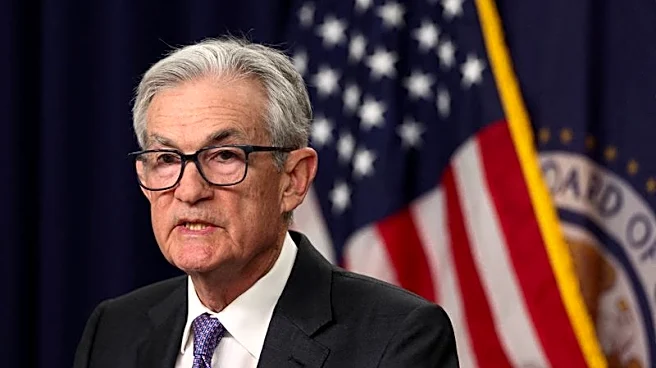
Jerome Powell, the current chair of the Federal Reserve, announced his intention to remain on the board of the Federal Reserve after his term as chair ends next month. This decision comes amidst what he describes as 'unprecedented' legal attacks from
the Trump administration, which he believes threaten the independence of the central bank. The Federal Reserve has decided to keep its benchmark interest rate unchanged, a move that reflects the ongoing economic uncertainty exacerbated by the conflict in the Middle East. Powell's decision to stay on the board denies President Trump the opportunity to appoint a new member to the central bank's governing board. Kevin Warsh, nominated by Trump, is set to succeed Powell as chair, pending Senate confirmation. Powell's continued presence on the board could complicate Warsh's efforts to implement rate cuts, which both he and Trump have advocated for.
Why It's Important?
Powell's decision to remain on the board highlights the ongoing tension between the Federal Reserve and the Trump administration. The independence of the Federal Reserve is crucial for maintaining unbiased monetary policy, free from political influence. Powell's presence could serve as a counterbalance to any attempts by Warsh to rapidly implement rate cuts, which could have significant implications for the U.S. economy, particularly in a time of heightened inflation and geopolitical uncertainty. The situation underscores the delicate balance the Federal Reserve must maintain in its policy decisions, especially with inflation rates rising and the job market showing signs of strain.
What's Next?
Kevin Warsh's confirmation as the new chair of the Federal Reserve is expected to proceed smoothly, given the Republican control of the Senate. However, his ability to enact policy changes may be tempered by Powell's continued influence on the board. The Federal Reserve will need to navigate the economic challenges posed by the ongoing conflict in the Middle East and rising inflation. The central bank's future decisions will likely be closely scrutinized, both domestically and internationally, as stakeholders assess the impact of these leadership dynamics on U.S. monetary policy.