



What's Happening?
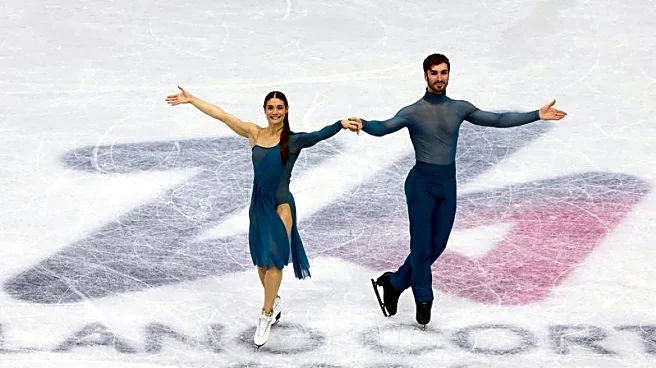
The 2026 Winter Olympics have seen renewed scrutiny over figure skating judging, particularly following the ice dance event where Americans Madison Chock and Evan Bates were controversially awarded silver. Despite a strong performance, they were outscored by French pair Laurence Fournier Beaudry and Guillaume Cizeron. The judging has been criticized for potential bias, with the French judge scoring the American pair significantly lower. This has reignited debates about the transparency and fairness of the judging process in figure skating.
Why It's Important?
Judging controversies in figure skating can have significant implications for the sport's credibility and the athletes' careers. For American athletes, perceived bias can affect their chances of winning medals
and gaining recognition. The issue also highlights broader concerns about the subjectivity of judged sports and the need for reforms to ensure fairness. The International Skating Union's response to these concerns will be crucial in maintaining the sport's integrity and public trust.
Beyond the Headlines
The controversy may lead to calls for technological solutions, such as AI, to assist in judging and reduce human bias. This could represent a significant shift in how judged sports are evaluated, potentially increasing transparency and fairness. However, implementing such changes would require careful consideration of the technology's limitations and the potential impact on the sport's traditional judging methods.