






What's Happening?
Critical Metals, a company involved in the production of rare-earth minerals, is currently facing significant challenges as it navigates a volatile market environment. The company's stock has experienced dramatic fluctuations, with a notable drop from
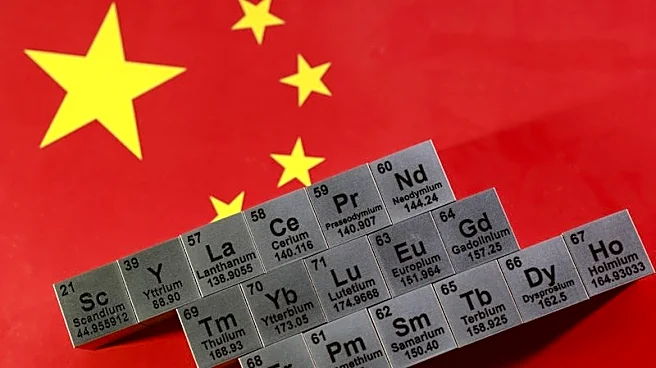
a 52-week high of $32.15 to $11.46. Despite a recent surge of 26% over the past month, the company remains a speculative investment. Critical Metals is not yet operational in mining, which adds to its risk profile. The company aims to produce essential minerals like hafnium, crucial for industries such as aerospace, defense, and technology. However, the market is heavily influenced by China's dominance, which controls 75% of the hafnium market. Critical Metals plans to produce 130,000 tons of hafnium concentrate annually by 2030 through its Tanbreez Project in Greenland. The company has also faced dilution issues, having sold $60 million worth of equity recently.
Why It's Important?
The situation with Critical Metals highlights the broader geopolitical and economic challenges facing the rare-earth minerals market. The company's reliance on future production and the geopolitical tensions surrounding China's market control underscore the risks involved. Rare-earth minerals are vital for various high-tech and defense applications, making their supply a strategic concern for the U.S. The Trump administration has shown interest in securing domestic sources for these minerals, which could influence future policy and investment in the sector. Investors are drawn to the potential high returns but must weigh these against the significant risks and uncertainties. The company's ability to deliver on its promises could have substantial implications for the U.S. economy and its technological and defense capabilities.
What's Next?
Critical Metals' future hinges on its ability to transition from a speculative investment to a profitable enterprise. The company's success in developing its Greenland project and securing a stable supply of hafnium will be crucial. Investors and policymakers will be closely watching for any developments that could impact the rare-earth minerals market, including potential shifts in U.S. policy or changes in China's market strategy. The company's progress will also be a test case for the viability of domestic rare-earth production in reducing reliance on foreign sources. As the geopolitical landscape evolves, Critical Metals' role in the market could become increasingly significant.
Beyond the Headlines
The challenges faced by Critical Metals also reflect broader issues in the global supply chain for critical minerals. The company's efforts to establish a domestic supply could have long-term implications for U.S. economic and national security. The reliance on foreign sources for essential minerals poses risks that could be mitigated by successful domestic production. Additionally, the environmental and regulatory aspects of mining in Greenland could present further challenges and opportunities for the company. The outcome of Critical Metals' endeavors could influence future investment and policy decisions in the rare-earth sector.