



What's Happening?
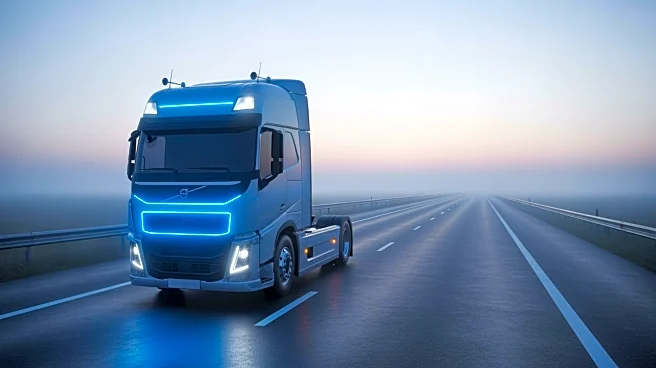
Several companies, including Aurora, Kodiak, and Waabi, are preparing to introduce fully autonomous semi-trucks on U.S. highways by 2027. These companies aim to reduce costs associated with human drivers, which can account for up to 40% of per-mile expenses.
Aurora plans to expand its fleet from a few autonomous trucks to over 200 by the end of the year, with thousands expected by 2027. The company has already launched a 1,000-mile route between Fort Worth and Phoenix, surpassing the capabilities of human drivers due to work-hour restrictions. Kodiak is also conducting interstate runs with 15 trucks for major clients like J.B. Hunt and Werner Enterprises, operating from a hub in Texas. The U.S. freight-truck industry, valued at over $900 billion annually, is expected to see significant changes, with Texas being a primary deployment area due to its favorable conditions.
Why It's Important?
The introduction of self-driving semi-trucks could revolutionize the U.S. freight industry by significantly reducing operational costs and increasing efficiency. This shift could lead to lower transportation costs for goods, potentially impacting consumer prices and supply chain dynamics. The move towards automation in trucking also raises questions about the future of truck driving jobs, which could face significant reductions. However, it also presents opportunities for new jobs in technology and maintenance of these autonomous systems. The focus on Texas as a primary deployment area highlights the state's strategic importance in the logistics sector, potentially boosting its economic standing.
What's Next?
As these companies continue to develop and test their autonomous trucking technologies, regulatory frameworks will need to adapt to accommodate this new mode of transportation. Stakeholders, including policymakers, industry leaders, and labor unions, will likely engage in discussions about the implications for employment and safety standards. The success of these initial deployments in Texas could serve as a model for other states, influencing nationwide adoption. Additionally, advancements in technology and infrastructure will be crucial to support the widespread use of self-driving trucks.