





What's Happening?
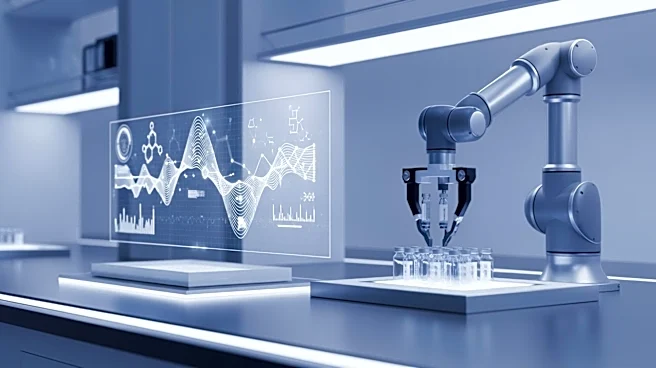
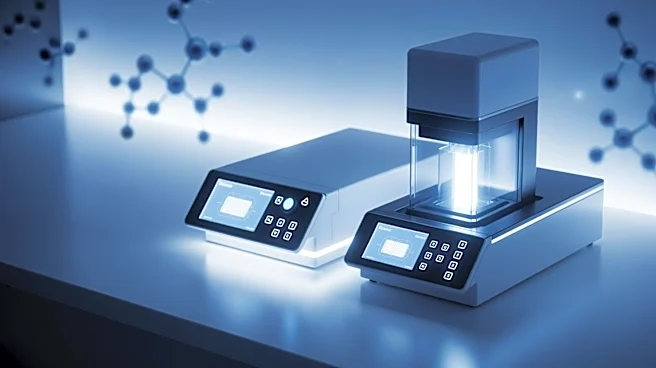
A new self-driving laboratory platform, RoboChem-Flex, has been developed to automate reaction optimization processes. This platform utilizes a slug-flow regime and modular hardware components, allowing for scalable and customizable experimentation. The
system is controlled by Python-based software, which includes a Bayesian optimization engine for data-driven experimentation. The platform's design prioritizes accessibility and cost-effectiveness, using widely available materials and 3D-printed components. It has been successfully applied in various chemical optimization challenges, demonstrating its versatility and efficiency.
Why It's Important?
The introduction of RoboChem-Flex represents a significant advancement in the field of chemical research and development. By automating reaction optimization, the platform reduces the time and resources required for experimentation, potentially accelerating the discovery of new chemical processes and products. This technology could benefit industries such as pharmaceuticals, where rapid and efficient optimization is crucial. Additionally, the platform's affordability and accessibility make it a valuable tool for researchers in academia and smaller laboratories, democratizing access to advanced experimental capabilities.
What's Next?
Future developments may focus on expanding the platform's capabilities, integrating more complex analytical tools, and enhancing its machine learning algorithms. Collaboration with industry partners could lead to the commercialization of RoboChem-Flex, making it available to a broader range of users. As the platform gains traction, it may inspire similar innovations in other areas of scientific research, further advancing the field of automated experimentation.
Beyond the Headlines
The adoption of self-driving laboratories like RoboChem-Flex could have far-reaching implications for the scientific community. It may lead to a shift in research methodologies, with a greater emphasis on automation and data-driven decision-making. This could change the skill sets required for researchers, emphasizing computational and analytical skills. Additionally, the platform's ability to optimize complex reactions could lead to breakthroughs in sustainable chemistry, contributing to environmental conservation efforts.