



What's Happening?
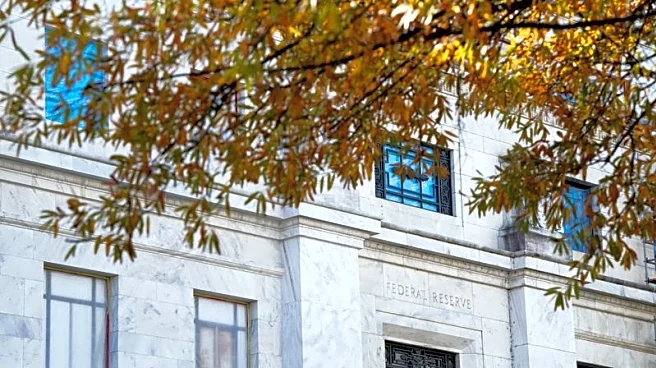
The US Federal Reserve is expected to keep interest rates unchanged as the ongoing conflict between the US-Israel and Iran impacts global oil markets and supply chains. The Fed's two-day meeting, concluding with an announcement on the benchmark lending
rate, comes amid economic data showing signs of weakness. The central bank's decision is influenced by the dual mandate of maintaining inflation near a two percent target while ensuring maximum employment. With rising oil prices potentially fueling inflation, analysts suggest the Fed is unlikely to make immediate changes. The situation presents a challenge for policymakers as they balance inflation control with employment management.
Why It's Important?
The Fed's decision to hold interest rates steady reflects the complex economic landscape shaped by geopolitical tensions. The conflict in the Middle East has led to a spike in oil prices, which could exacerbate inflationary pressures in the US. This situation poses a dilemma for the Fed, as raising rates to curb inflation could conflict with efforts to manage unemployment. The decision is crucial for economic stakeholders, including businesses and consumers, as it influences borrowing costs and economic growth. The outcome of the Fed's meeting will be closely watched for its implications on the US economy and global financial markets.
What's Next?
The Fed's upcoming release of its quarterly Summary of Economic Projections will provide insights into its outlook for GDP growth, inflation, and unemployment. Analysts will be looking for any potential downward revisions in these projections. The ongoing conflict in the Middle East adds uncertainty to the economic outlook, with potential long-term impacts on energy prices and supply chains. The Fed's future actions will depend on how the situation evolves and its effects on inflation and employment. Stakeholders will need to monitor developments closely to anticipate potential shifts in monetary policy.