
What's Happening?
The ongoing U.S.-Iran conflict has led to a surge in oil prices, impacting various sectors of the American economy. Businesses, particularly those reliant on transportation, are experiencing increased
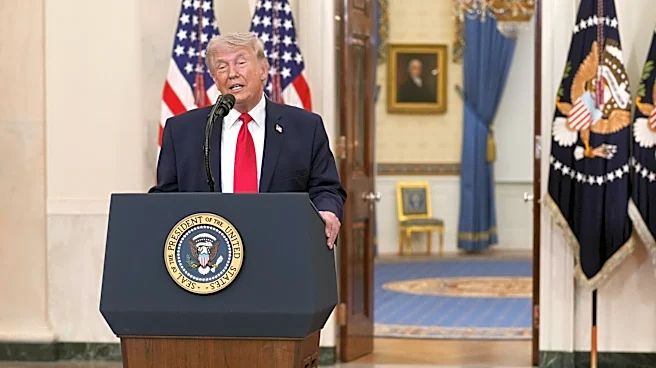
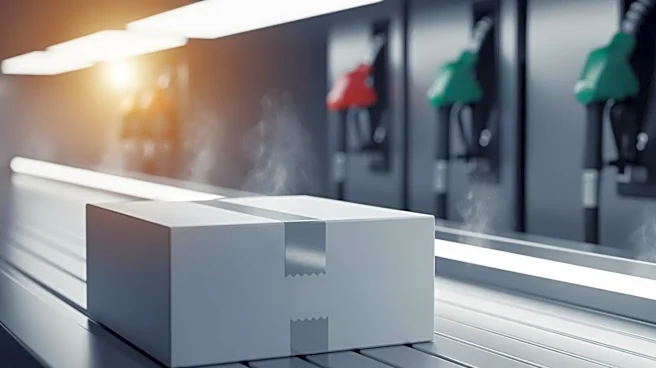
operational costs due to higher diesel and jet fuel prices. Companies like United Airlines and JetBlue have responded by raising baggage fees, while Amazon has introduced a fuel surcharge for sellers. The Federal Reserve, led by Chair Jerome Powell, is facing a complex situation. Despite the rising oil prices, Powell has indicated that there is no immediate plan to adjust interest rates, as short-term oil shocks are typically overlooked in inflation analysis. The central bank's cautious approach reflects concerns about potentially exacerbating inflation if rates are lowered. The U.S. economy, heavily dependent on consumer spending, is feeling the pressure as discretionary spending is expected to decline, potentially slowing economic growth.
Why It's Important?
The surge in fuel prices acts as a 'tax' on consumers and businesses, affecting a wide range of goods and services. This situation poses a significant challenge for small businesses, which may struggle to absorb the increased costs without passing them on to consumers. Larger companies have more flexibility to adjust prices, potentially widening the gap between them and smaller competitors. The Federal Reserve's decision to maintain interest rates could stabilize inflation expectations but may also limit economic stimulus options. The conflict's duration will be crucial; a prolonged disruption could lead to more severe economic consequences, including reduced consumer spending and slower growth. The situation underscores the interconnectedness of global events and domestic economic stability, highlighting the need for strategic responses from both businesses and policymakers.
What's Next?
If the U.S.-Iran conflict continues, businesses may need to explore operational efficiencies to mitigate rising costs. The Federal Reserve will likely monitor inflation trends closely, balancing the need to control inflation with the potential need for economic stimulus. Companies that can adapt quickly to changing conditions may fare better, while those relying solely on surcharges could face challenges as consumer tolerance for price increases diminishes. The broader economic impact will depend on the conflict's duration and the ability of businesses and consumers to adjust to new cost structures.
Beyond the Headlines
The current situation may lead to long-term shifts in business strategies, with companies investing in more efficient technologies and supply chain adjustments to reduce dependency on volatile fuel prices. The conflict also raises ethical considerations regarding the balance between profit margins and consumer affordability. As businesses navigate these challenges, there may be increased scrutiny on corporate practices and their impact on economic inequality.