










What's Happening?
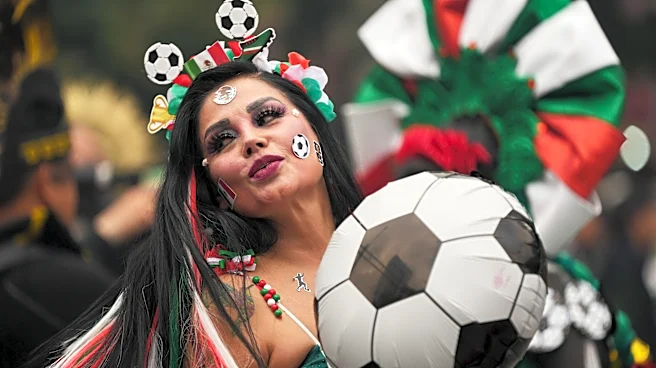
The 2026 World Cup has commenced, marking a significant event in the global football calendar. Notably, Italy is absent from the tournament, which is being hosted across North America. The opening match features Mexico against South Africa at the iconic
Azteca Stadium. This World Cup is the 23rd edition and includes 48 participating teams, with the final scheduled for July 19. The tournament is notable for its expanded format and the absence of Italy, a traditional football powerhouse. Key players like Lionel Messi are expected to play pivotal roles, with Argentina and France among the favorites. The event also marks the last World Cup for several football icons, adding a layer of historical significance.
Why It's Important?
The absence of Italy from the World Cup is a significant development, reflecting shifts in global football dynamics. Italy's non-participation could impact the viewership and commercial interests associated with the tournament, as Italian fans are traditionally passionate and numerous. The expanded format of the World Cup, with 48 teams, represents a broader inclusion of nations, potentially increasing global engagement and viewership. This change could influence future tournament structures and the global football economy. Additionally, the tournament serves as a platform for emerging football talents and could affect player transfers and market values post-tournament.
What's Next?
As the World Cup progresses, attention will focus on the performance of key teams and players, with potential implications for international rankings and future tournaments. The outcomes could influence coaching strategies and player selections for upcoming international competitions. The tournament's conclusion will likely spark discussions on the effectiveness of the expanded format and its impact on the quality of play. Additionally, the absence of Italy may prompt introspection within Italian football circles, potentially leading to strategic changes aimed at ensuring future World Cup qualifications.