


What's Happening?
Major technology companies, including Amazon, Google, Microsoft, and Meta, are investing in small modular reactors (SMRs) to power data centers, reflecting a shift in energy strategy. These investments are part of power purchase agreements, funding partnerships,
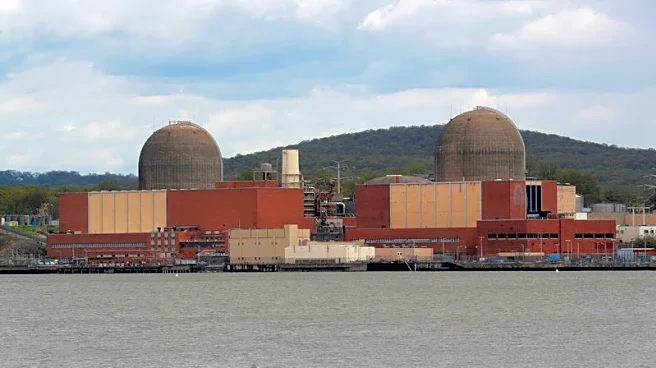
or site-level development agreements. SMRs, which modernize traditional nuclear power, are seen as a viable solution to meet the increasing energy demands of data centers, which are projected to consume up to 12% of national electricity demand by 2028. The U.S. government and private investors have committed nearly $9 billion to SMR development, indicating confidence in overcoming public skepticism rooted in Cold War anxieties and the Chernobyl disaster. SMRs offer the advantage of being deployed on-site, reducing dependence on the electrical grid and addressing the lengthy interconnection wait times faced by data center operators.
Why It's Important?
The investment in SMRs by tech giants highlights a significant shift in how data centers are powered, with potential implications for the U.S. energy infrastructure. As data centers continue to grow and demand more power, traditional energy sources and grid infrastructure may struggle to keep pace. SMRs provide a scalable and reliable alternative, potentially reducing the pressure on the national grid and enabling further technological innovation. This move could also influence public perception of nuclear power, as successful deployment of SMRs in data centers may alleviate longstanding fears and skepticism. The involvement of major tech companies suggests that SMRs are not only technologically viable but also financially attractive, potentially paving the way for broader adoption across various industries.
What's Next?
The first deployment of SMR-powered data centers is expected to set a precedent, driving market confidence and encouraging further investment. As these projects come online, they may streamline permitting processes and attract competitive financing, leading to wider adoption. The success of SMRs in data centers could prompt other sectors to consider similar energy solutions, potentially transforming the U.S. energy landscape. However, regulatory frameworks and public perception will play crucial roles in determining the pace and extent of SMR adoption. Continued support from government agencies and private investors will be essential to overcoming existing barriers and realizing the full potential of SMRs.
Beyond the Headlines
The adoption of SMRs in data centers could have broader implications for energy policy and environmental sustainability. By reducing reliance on fossil fuels and grid infrastructure, SMRs may contribute to carbon reduction goals and enhance energy security. Additionally, the shift towards nuclear power could stimulate innovation in reactor design and safety, potentially leading to advancements in other nuclear applications. The success of SMRs may also influence global energy strategies, as other countries look to the U.S. as a model for integrating nuclear power into modern infrastructure.