







What's Happening?
SpaceX shares increased by 6% in premarket trading after the company's record-breaking initial public offering (IPO) on the Nasdaq. The IPO, which took place last week, marked the largest in history, with SpaceX's stock closing at $161, up from its initial pricing
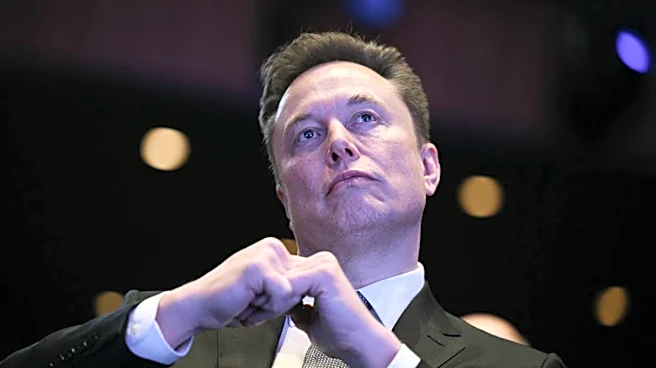
of $135 per share. This surge in stock price has elevated SpaceX's market capitalization to over $2 trillion. The company, led by Elon Musk, operates the Starlink satellite internet service and a fleet of reusable rockets. Despite a loss of nearly $5 billion in 2025, the IPO has sparked discussions about the company's valuation. Analysts have mixed opinions, with CFRA giving a 'sell' rating and a 12-month price target of $115, while New Street Research set a price target of $165.
Why It's Important?
The successful IPO of SpaceX underscores the growing investor confidence in the space exploration and satellite internet sectors. With a market capitalization exceeding $2 trillion, SpaceX's valuation reflects high expectations for its ambitious growth strategy, including its plans for Mars colonization and expansion of the Starlink service. However, the company's significant capital expenditures, particularly in artificial intelligence, and its recent financial losses raise questions about the sustainability of its valuation. The mixed analyst ratings highlight the uncertainty surrounding SpaceX's future performance and the potential risks associated with its aggressive expansion plans.
What's Next?
SpaceX's future will likely involve continued scrutiny from investors and analysts as it navigates its ambitious growth plans. The company's focus on expanding its Starlink service and advancing its space exploration initiatives will be key areas of interest. Additionally, the company's financial performance in the coming quarters will be closely watched to assess whether it can justify its high valuation. Potential regulatory challenges and competition in the satellite internet market may also impact SpaceX's trajectory.