



What's Happening?
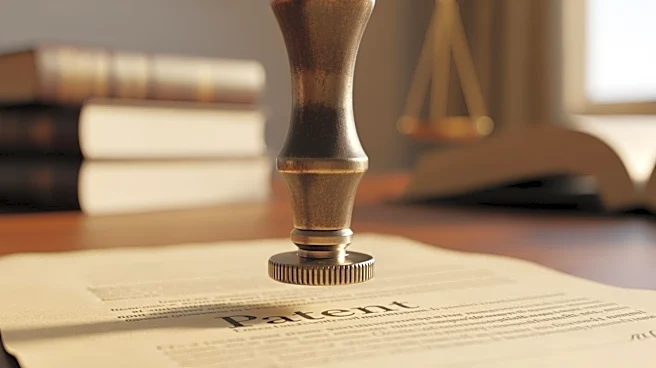
The United States Patent and Trademark Office (USPTO) has issued a nonfinal decision to revoke Nintendo's patent 12,403,397, which describes a system for battling summoned characters. This decision comes amidst Nintendo's ongoing legal battle in Japan
against Palworld developer Pocketpair. The patent, granted in September 2025, faced criticism for potentially being too broad and similar to existing works. The USPTO's decision to reexamine the patent was initiated by its Director, John A. Squires, indicating significant scrutiny. The examiner's decision rejected all 26 claims of the patent, citing similarities to prior art, including other videogame patents from companies like Konami and Bandai Namco, as well as Nintendo's own previous applications. Nintendo has two months to respond to this decision, which can be extended, before a final decision is made.
Why It's Important?
The USPTO's decision to potentially revoke Nintendo's patent highlights ongoing concerns about the patent system's ability to handle complex and evolving technologies like video games. This case underscores the challenges in distinguishing between innovative mechanics and those that are merely incremental or derivative. The outcome could have significant implications for the gaming industry, particularly in how companies protect their intellectual property. If the patent is ultimately revoked, it may encourage other companies to challenge similar patents, potentially leading to a reevaluation of what constitutes patentable innovation in gaming. This could impact how companies approach game development and intellectual property strategies, influencing both legal and business practices in the industry.
What's Next?
Nintendo has the opportunity to respond to the USPTO's nonfinal decision within two months, potentially extending this period if needed. Should the USPTO maintain its stance and revoke the patent, Nintendo may appeal the decision to the Federal Circuit. This process could take several months or even years, given the complexities of patent law. The gaming industry will likely watch closely, as the final outcome could set a precedent for future patent disputes. Companies may need to reassess their patent portfolios and strategies, considering the potential for increased scrutiny and challenges to existing patents.