



What's Happening?
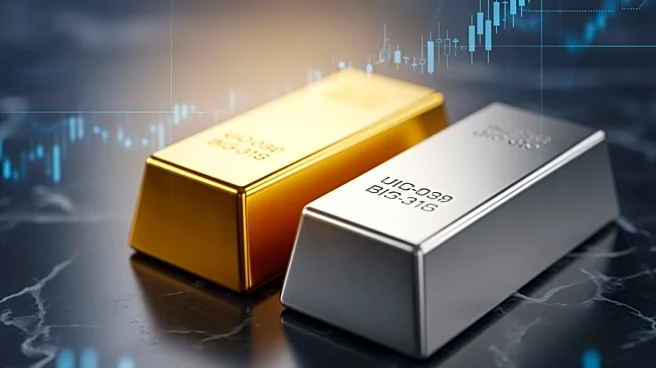
Gold and silver prices have reached new record highs, driven by expectations of looser U.S. monetary policy and ongoing geopolitical tensions. Gold prices have surpassed $4,400 per ounce, while silver has approached $70, marking significant gains for both metals this year. Analysts attribute these increases to U.S. interest rate cuts and a weaker dollar, with the dollar experiencing a 9% decline in 2025. The Federal Reserve's potential easing of policy further into 2026 is expected to continue supporting precious metal demand. Additionally, safe-haven demand remains strong due to geopolitical uncertainties, including tensions in the Middle East and U.S. actions against Venezuelan tankers.
Why It's Important?
The surge in gold and silver prices reflects broader economic
and geopolitical dynamics, with significant implications for investors and global markets. As traditional safe-haven assets, gold and silver are often sought after during periods of economic uncertainty and geopolitical instability. The current price rally suggests a lack of investor confidence in the stability of fiat currencies, particularly the U.S. dollar. This trend could lead to increased investment in precious metals as a hedge against inflation and currency devaluation. Furthermore, the continued demand for gold by central banks and investors highlights the metal's enduring role as a store of value.
What's Next?
Looking ahead, analysts predict further upside for gold and silver prices, with Goldman Sachs forecasting gold to reach $4,900 by December 2026. The ongoing decline of the U.S. dollar and potential further easing of monetary policy by the Federal Reserve are likely to sustain demand for precious metals. Additionally, geopolitical tensions and economic uncertainties may continue to drive safe-haven buying. However, the market may experience volatility due to stretched positioning and low year-end liquidity, with traders potentially buying on dips while real yields remain low.
Beyond the Headlines
The current rally in gold and silver prices underscores the complex interplay between monetary policy, geopolitical events, and investor behavior. As central banks continue to purchase gold, the metal's role in global financial systems is reinforced, potentially influencing monetary policy decisions. The inclusion of silver on the U.S. critical minerals list highlights its strategic importance, further supporting its price gains. This situation also raises questions about the sustainability of current economic policies and the potential long-term impacts on global financial stability.