





What's Happening?
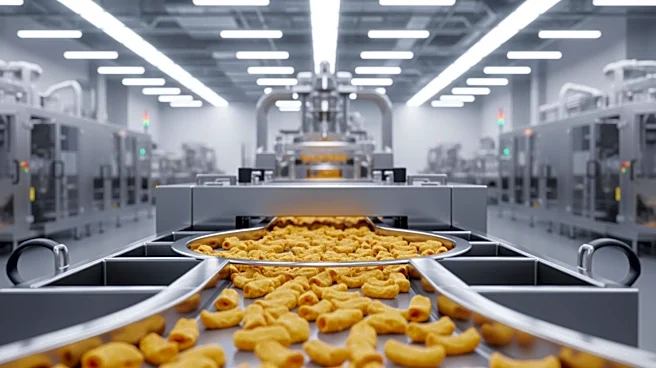
Crisp Power Protein Pretzels has announced a $15 million investment in a new manufacturing facility located in Stafford, Texas. This move marks a significant expansion of the company's operations within the United States, transitioning from an import-based
model to domestic production. Since its entry into the U.S. market in 2024, Crisp Power has been importing its products from Israel, produced by Meir Bagel, a bakery owned by founder and CEO Gilad Zilberberg. The new facility will serve as the company's domestic manufacturing hub, enabling it to meet the growing consumer and retailer demand for its high-protein snack products. The brand's pretzels offer up to 28 grams of protein, 10 grams of fiber, and 6 grams of net carbohydrates per 1.75-ounce bag, with flavors such as Everything, Sea Salt, Sesame, Cinnamon Crunch, Cheddar, and Flamin' Crunch.
Why It's Important?
The investment in the Texas facility is crucial for Crisp Power as it seeks to capitalize on the growing demand for high-protein snacks in the U.S. market. By shifting production domestically, the company can accelerate distribution and support further retail and e-commerce growth. This strategic move follows triple-digit year-over-year growth since its U.S. launch, indicating strong consumer interest in healthier snack options. The expansion is expected to enhance the company's ability to supply major retailers such as Meijer, Costco, Wegmans, Hy-Vee, H-E-B, Fresh Thyme, Market Basket, and The Vitamin Shoppe, where Crisp Power products are already available.
What's Next?
With the Texas facility now operational, Crisp Power plans to increase its production capacity to meet the rising demand. The company aims to expand its retail presence further and enhance its e-commerce capabilities. Recent retail wins, including Fresh Thyme's introduction of the brand's 7-ounce bags and Wegmans' expansion of its product range, underscore the need for increased production. As the company continues to grow, it may explore additional partnerships and distribution channels to reach more consumers across the United States.