



What's Happening?
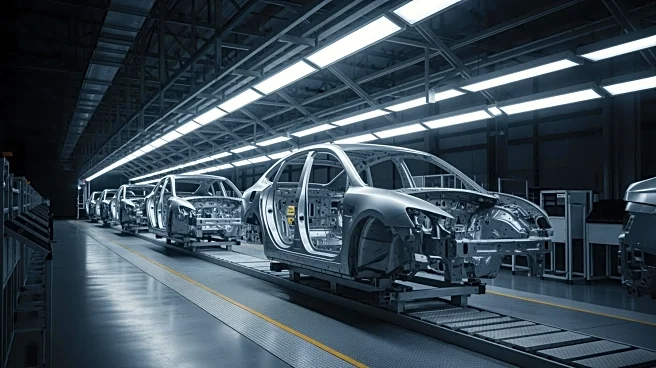
General Motors (GM) has announced an increase in production at its Flint Assembly plant in Michigan, extending operations to six days a week starting in June. This decision comes in response to strong demand for heavy-duty pickups, such as the Silverado
and Sierra models. Concurrently, GM has idled its Factory Zero electric vehicle (EV) facility in Detroit until April 13, extending a production pause that began on March 16 due to weak demand for its electric offerings. Flint Assembly, GM's oldest operational plant, currently runs three shifts across five days, producing approximately 1,100 pickups daily. The additional production day will be covered by mandatory overtime for the plant's 4,200 hourly workers. Despite a 48% increase in EV sales last year, GM's electric vehicle market share has dipped, partly due to the elimination of the federal EV tax credit and a broader regulatory retreat under the Trump administration.
Why It's Important?
The shift in GM's production strategy highlights the ongoing challenges faced by the electric vehicle market in the U.S. Despite rising oil prices, which typically encourage a shift towards more fuel-efficient vehicles, GM has not observed a significant change in consumer behavior. The decision to boost pickup production while idling the EV plant underscores the company's reliance on its more profitable internal combustion engine models. This move could have implications for GM's long-term strategy and its commitment to electric vehicles, especially as regulatory and market conditions evolve. The situation also reflects broader industry trends, where traditional automakers are balancing between current market demands and future sustainability goals.
What's Next?
If the current oil price environment persists, GM may eventually see a shift in consumer preferences towards electric vehicles. However, any significant change is expected to take several months. In the meantime, GM's focus on increasing pickup production could bolster its short-term profitability. The company will need to monitor market conditions closely and adjust its strategy accordingly. The outcome of the Iran conflict and its impact on oil prices will be critical factors influencing consumer behavior and GM's production decisions in the coming months.