






What's Happening?
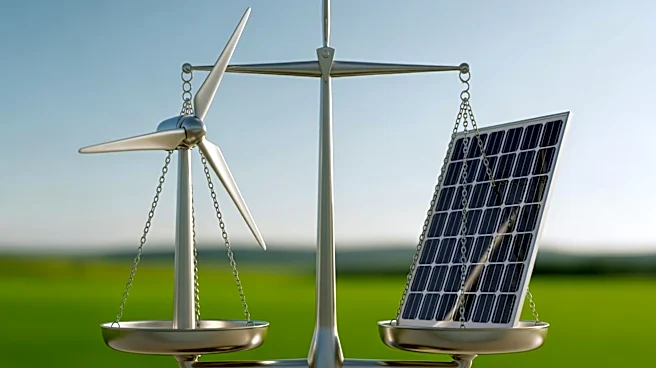
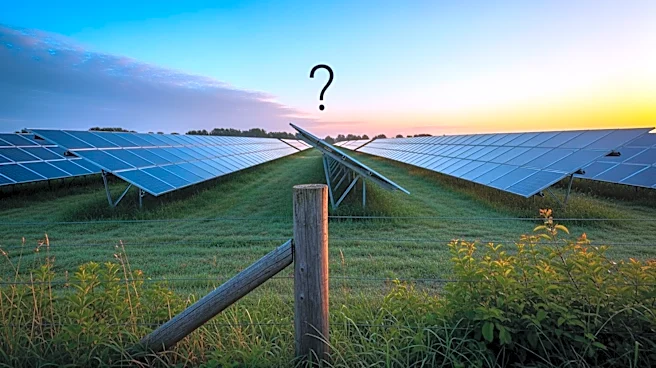
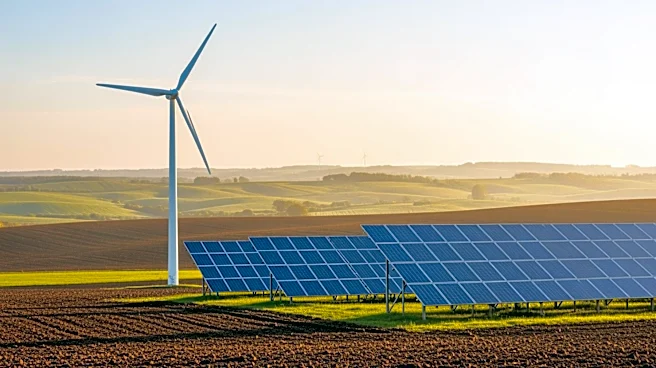
Farmers across the United States are increasingly turning to renewable energy projects, such as solar and wind, to secure stable income amid fluctuating agricultural revenues. The rising costs of fertilizers, pesticides, and fuel, coupled with unpredictable
weather patterns, have made traditional farming more challenging. Renewable energy projects offer farmers a reliable source of income through land lease or royalty payments, which can help offset the volatility in agricultural production. These projects not only provide financial resilience for farmers but also contribute to local economies by generating tax revenue and creating jobs.
Why It's Important?
The integration of renewable energy projects into farming operations is crucial for the financial sustainability of small family farms, which constitute 86% of U.S. farms. These projects help diversify income sources, making farms more resilient to economic shocks such as poor harvests. Additionally, the revenue from renewable energy supports rural communities by funding public infrastructure and services. As the demand for renewable energy grows, rural areas that embrace these projects are better positioned to capture economic benefits, ensuring the long-term viability of their agricultural sectors.
What's Next?
As renewable energy infrastructure continues to expand, it is expected that 90% of future solar installations will be on rural lands. This trend presents an opportunity for rural communities to align energy projects with local priorities through community benefits agreements. However, there are concerns about the impact on farmland and property values, which need to be addressed through careful planning and stakeholder engagement. The ongoing development of renewable energy projects will likely continue to shape the economic landscape of rural America, providing a buffer against the challenges faced by traditional farming.
Beyond the Headlines
The shift towards renewable energy in rural areas highlights a broader transition in the U.S. energy landscape. This movement not only supports environmental goals but also addresses economic disparities in rural communities. By reducing reliance on fossil fuels and enhancing energy independence, these projects contribute to a more sustainable and equitable future. The success of renewable energy in rural areas could serve as a model for integrating sustainable practices into other sectors, promoting a holistic approach to economic and environmental resilience.