
What's Happening?
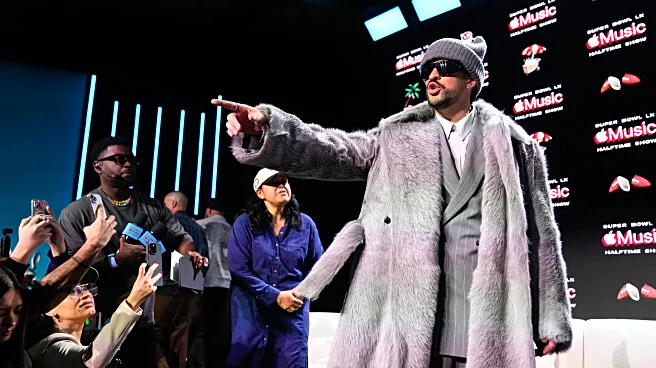
Puerto Rican singer Bad Bunny is set to perform at the Super Bowl XL halftime show, a decision by the NFL that underscores his immense popularity with a global audience. Bad Bunny's rise from humble beginnings, bagging groceries and uploading songs on SoundCloud, to becoming a global music icon is seen as a triumph of American capitalism. His album 'Debí Tirar Más Fotos' made him Spotify's top artist in 2025, marking the fourth time he achieved this distinction. His songs were streamed nearly 20 billion times last year. The performance will also feature punk rock band Green Day, both acts known for their progressive political views. President Trump has expressed his disapproval, stating he won't watch the show due to his opposition to the performers'
political stances. In response, Turning Point USA has organized an alternative 'all-American' show headlined by Kid Rock, airing on conservative channels and social media.
Why It's Important?
Bad Bunny's participation in the Super Bowl halftime show represents a significant cultural shift in the U.S. music industry, reflecting the growing influence of Latino artists and audiences. Hispanics now account for nearly 20 percent of the U.S. population, with a median age of 31, the same as Bad Bunny. This demographic change is reshaping the music market, challenging traditional preferences and highlighting the diversity of American culture. The controversy surrounding the political views of the performers illustrates the ongoing cultural and ideological divides in the U.S., with some conservatives boycotting the show while others embrace the evolving landscape. The event underscores the power of free-market dynamics in elevating artists who resonate with a broad audience, regardless of political affiliations.
What's Next?
The Super Bowl performance is likely to further cement Bad Bunny's status as a leading figure in the music industry, potentially opening doors for more Latino artists to gain mainstream recognition. The alternative show by Turning Point USA may attract viewers who prefer conservative-leaning entertainment, highlighting the polarization in American pop culture. As the U.S. demographic continues to evolve, the music industry may see increased representation of diverse voices, influencing future entertainment choices and marketing strategies. The response from audiences and media could shape discussions on the intersection of politics and entertainment, as well as the role of cultural representation in major events.
Beyond the Headlines
The inclusion of Bad Bunny in the Super Bowl halftime show reflects broader societal changes, including the acceptance and celebration of multicultural influences in mainstream American culture. This shift may encourage more inclusive practices across various industries, promoting diversity and representation. The event also raises questions about the impact of political ideologies on entertainment choices, as artists and audiences navigate the balance between artistic expression and political beliefs. The growing prominence of Latino artists could lead to increased advocacy for issues affecting Hispanic communities, potentially influencing public policy and social initiatives.