




What's Happening?
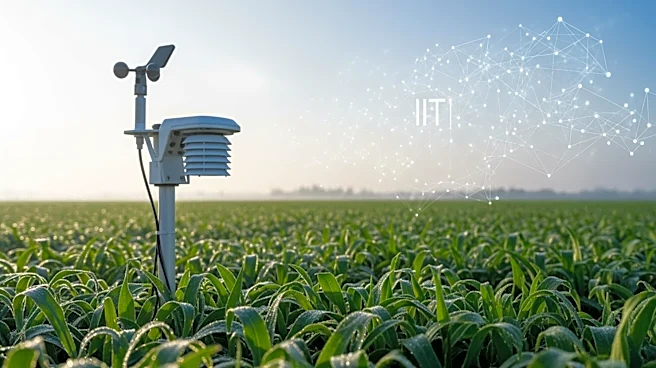
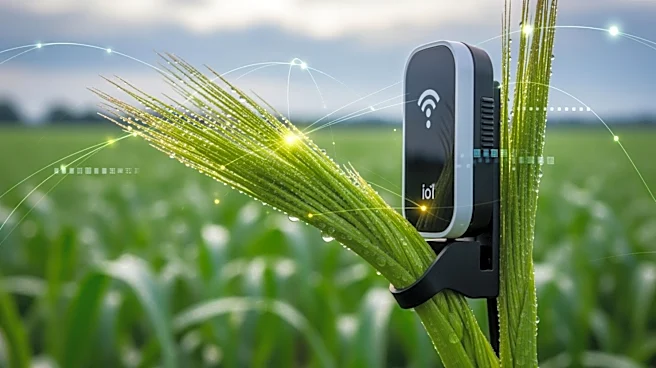
A new study published in AgriEngineering proposes an innovative agentic AI framework designed to transform precision agriculture. This framework integrates artificial intelligence, Internet of Things (IoT) sensors, and autonomous systems into a cohesive
model that allows farms to operate through networks of autonomous agents. These agents are capable of continuous perception, reasoning, decision-making, and execution, moving beyond traditional AI systems that rely on human intervention. The study highlights the limitations of current AI-driven precision agriculture systems, which are often centralized and episodic, requiring human interpretation to act on insights. The agentic AI model introduces a decentralized approach, enabling real-time responsiveness to environmental changes such as pest outbreaks or weather fluctuations. This system is grounded in a Multi-Agent Partially Observable Markov Decision Process, allowing for structured decision-making under uncertainty.
Why It's Important?
The introduction of agentic AI in agriculture could significantly enhance the efficiency and sustainability of farming operations. By enabling real-time, autonomous decision-making, farms can optimize resource use, reduce water consumption, and minimize chemical usage, potentially lowering operational costs while maintaining or improving crop yields. This approach aligns with the growing need for sustainable agricultural practices amid climate volatility and resource scarcity. However, the adoption of such systems faces challenges, including data quality, connectivity issues, and the need for technical expertise. The framework's potential to transform agriculture could lead to more resilient food systems, crucial for feeding a growing global population projected to exceed 9.5 billion by 2050.
What's Next?
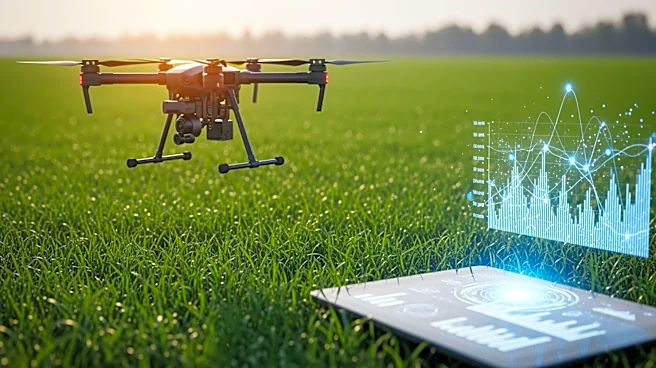
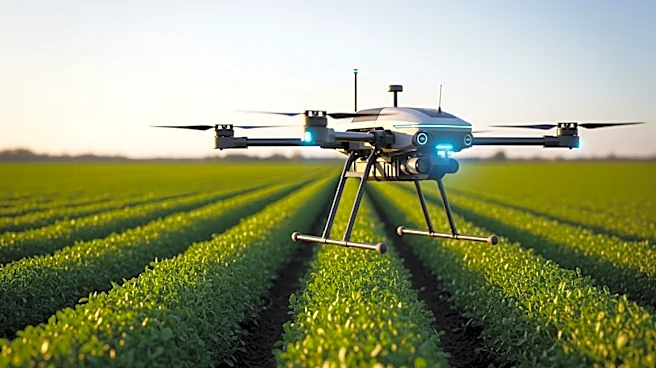
The transition from conceptual frameworks to operational systems will require advances in technology, infrastructure, and policy. Future research will focus on integrating these systems with physical platforms like UAVs and robotic equipment, enabling full automation. Long-term field studies are necessary to evaluate system performance under real-world conditions. Addressing challenges such as data reliability, connectivity, and interoperability will be critical for widespread adoption. Additionally, ensuring secure communication and data integrity will be essential as agricultural systems become more connected and autonomous.