



What's Happening?
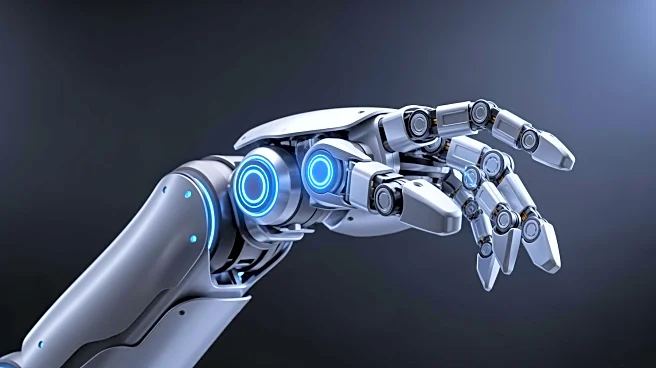
Synopsys is intensifying its efforts in the field of physical AI, aiming to develop adaptive machines capable of sensing and interacting with their environments. This initiative is part of a broader trend towards integrating AI into various sectors such as high-tech, automotive, aerospace, healthcare, and energy. Synopsys is focusing on silicon-based, software-enabled, AI-driven systems, which include robots, self-driving vehicles, and intelligent cameras. The company is moving beyond large language models to more sophisticated AI models that understand the physical world. This development is part of the Industry 4.0 movement, which seeks to enhance autonomous systems to operate with minimal human intervention. Synopsys plans to showcase its AI-augmented
simulation solutions at the upcoming AI India Summit.
Why It's Important?
The advancement of physical AI by Synopsys is significant as it represents a shift towards more intelligent and autonomous systems across various industries. This technology has the potential to revolutionize sectors by improving efficiency and reducing operational costs. For instance, companies like Amazon and Foxconn have already reported significant improvements in delivery times and cost reductions due to robotic automation. The development of agentic AI, which involves AI agents working alongside human engineers, could address skill shortages in the tech industry and accelerate manufacturing processes. This collaboration between AI and human engineers could lead to more innovative solutions and drive economic growth.
What's Next?
Synopsys is expected to continue its investment in physical AI and agentic AI, potentially leading to further advancements in autonomous systems. The company's participation in the AI India Summit will likely provide a platform to demonstrate its latest innovations and attract interest from various sectors. As these technologies become more integrated into industries, there may be increased demand for skilled professionals who can work with AI systems. Additionally, other companies may follow Synopsys's lead, further accelerating the adoption of AI in manufacturing and other fields.
Beyond the Headlines
The development of physical AI raises important ethical and societal questions, particularly regarding the role of AI in the workforce. While AI can enhance productivity and efficiency, there is a concern about potential job displacement. However, Synopsys emphasizes that its AI agents are designed to complement human workers rather than replace them. This approach could lead to a new model of collaboration between humans and machines, where AI handles repetitive tasks, allowing humans to focus on more complex and creative work. The long-term implications of this shift could redefine job roles and require new skill sets in the workforce.