
What's Happening?
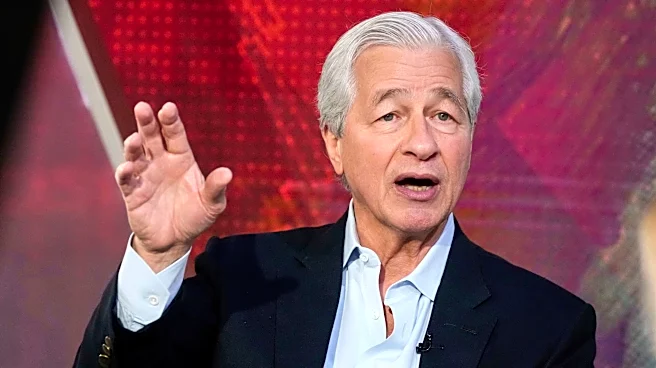
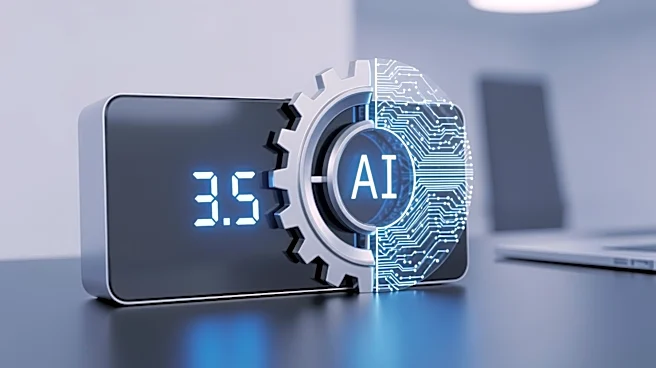
JPMorgan Chase CEO Jamie Dimon has predicted that advancements in artificial intelligence (AI) will lead to a significant reduction in the workweek, potentially down to 3.5 days. In a recent interview
with CBS, Dimon expressed optimism about the future, suggesting that AI's productivity gains will result in more jobs and fewer working hours. He envisions a future where people will have more leisure time to enjoy activities like hiking, as AI enhances productivity and quality of life. In his annual letter to shareholders, Dimon reiterated these points, highlighting AI's potential to cure diseases, create new materials, and reduce accidental deaths. However, he also acknowledged the short-term challenges posed by AI, including job displacement. Dimon emphasized the need for businesses and governments to collaborate on ensuring job security and workforce adaptation as AI continues to evolve.
Why It's Important?
The implications of Dimon's predictions are significant for the U.S. job market and economy. If AI can indeed reduce the workweek while maintaining or increasing productivity, it could lead to a fundamental shift in how work is structured. This could benefit employees by providing more work-life balance and potentially improving mental health and job satisfaction. However, the transition may not be smooth, as AI could disrupt existing jobs and industries. Dimon's call for retraining and government intervention highlights the need for proactive measures to mitigate potential negative impacts on employment. The success of this transition will depend on how well businesses and policymakers can manage the balance between technological advancement and job security.
What's Next?
As AI continues to develop, businesses and governments will need to focus on strategies for workforce adaptation. This includes retraining programs and policies to support workers displaced by automation. Dimon has proposed plans for retraining and income assistance to prevent job market chaos. Additionally, there may be discussions around implementing restrictions on layoffs and providing incentives for companies to retain and retrain employees. The broader societal impact of AI will also require ongoing dialogue between stakeholders to ensure that technological progress benefits all segments of society.
Beyond the Headlines
The integration of AI into the workforce raises ethical and cultural questions about the future of work. As AI takes on more tasks, there may be a shift in the skills valued in the job market, with a greater emphasis on emotional intelligence and human-centric skills. This could lead to a reevaluation of education and training programs to better prepare future generations for an AI-driven economy. Furthermore, the potential for AI to improve quality of life through medical advancements and increased leisure time presents opportunities for societal growth, but also challenges in ensuring equitable access to these benefits.