






What's Happening?
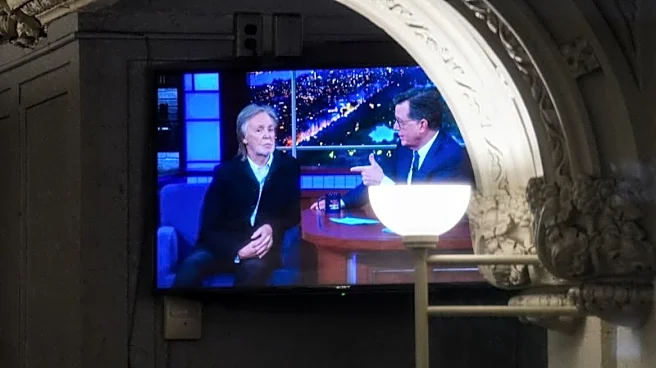
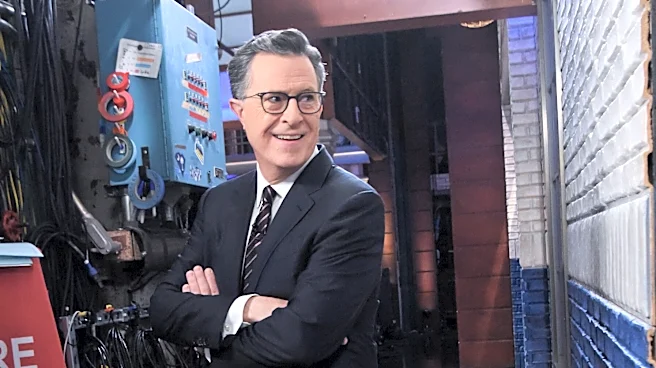
Stephen Colbert's 'The Late Show' concluded its run with a final episode that combined real-world celebration and a sci-fi twist. The episode featured numerous celebrity appearances, including Paul McCartney, who reminisced about The Beatles' first U.S.
appearance at the Ed Sullivan Theater. The show ended with a fictional interdimensional wormhole that humorously 'sucked' Colbert, the audience, and the theater into another dimension. The episode avoided political commentary, focusing instead on musical performances and a light-hearted farewell. Colbert's final words expressed gratitude for the show's 11-year run.
Why It's Important?
The conclusion of 'The Late Show with Stephen Colbert' marks the end of an era in late-night television. Colbert's show has been a staple of political satire and cultural commentary, influencing public discourse and providing a platform for diverse voices. The show's end could signal shifts in late-night programming, potentially affecting viewership patterns and advertising strategies. The finale's focus on entertainment over politics may reflect broader trends in media consumption, where audiences seek escapism amid complex global issues.
What's Next?
With 'The Late Show' ending, CBS may explore new programming options to fill the late-night slot, potentially experimenting with different formats or hosts. The departure of a major figure like Colbert could lead to a reshuffling of late-night viewership, impacting ratings across networks. Other late-night hosts may adjust their content strategies to capture Colbert's audience. The show's end also opens opportunities for emerging talent to redefine the genre, possibly incorporating more digital and interactive elements to engage younger viewers.