


What's Happening?
Lewis Hamilton has identified a significant power unit performance gap between Ferrari and Mercedes, following his fourth-place qualification for the Chinese Grand Prix sprint race. Hamilton's best lap was over 0.6 seconds slower than George Russell,
who secured pole position for Mercedes. Hamilton noted that while Ferrari's car performs well in corners, it loses substantial time on straights due to power deficiencies. This issue was echoed by his teammate Charles Leclerc, who reported losing 0.5 seconds on a straight due to battery deployment issues. Despite these challenges, Ferrari remains hopeful of a stronger performance in the race, with Leclerc optimistic about closing the gap to Mercedes.
Why It's Important?
The power deficit faced by Ferrari highlights the ongoing competitive challenges in Formula 1, where engine performance is crucial. Mercedes' advantage in power units underscores their strategic foresight and technical prowess, potentially influencing the competitive dynamics of the season. For Ferrari, addressing this gap is critical to remain competitive and challenge for podium finishes. The situation also reflects broader industry trends where technological advancements and strategic planning play pivotal roles in determining success. Teams like Ferrari must innovate and adapt to maintain competitiveness, impacting their brand reputation and commercial success.
What's Next?
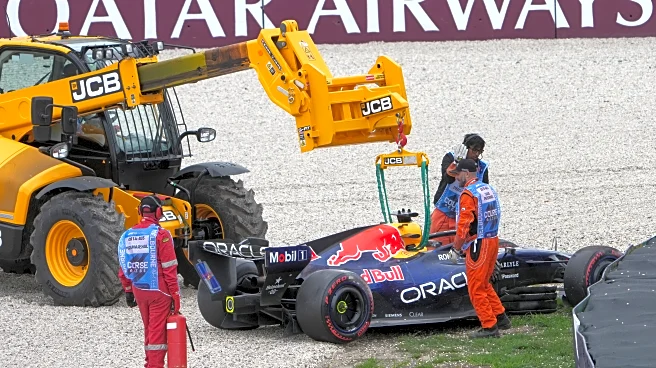
Ferrari is expected to focus on enhancing their power unit performance to close the gap with Mercedes. This may involve technical upgrades and strategic adjustments in upcoming races. The team's ability to address these issues will be crucial for their competitiveness throughout the season. Stakeholders, including sponsors and fans, will be closely monitoring Ferrari's progress. Additionally, the performance of other teams like Red Bull, which also faced challenges, will be a point of interest as they seek to improve their standings.