



What's Happening?
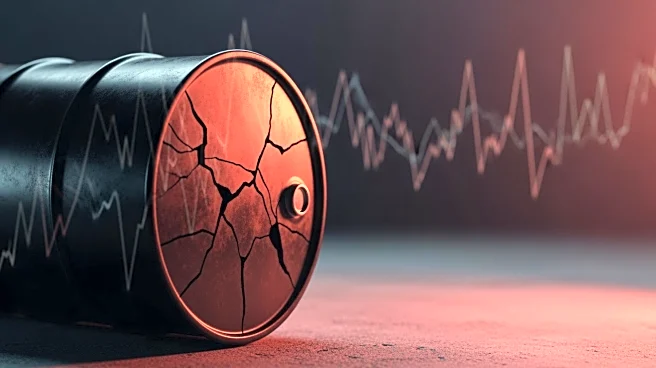
The ongoing conflict between the U.S. and Iran has led to significant disruptions in the global oil market, with Brent crude prices hovering around $100 a barrel. This price point is a critical psychological threshold that poses risks of increased inflation
and economic slowdown. The U.S. economy, which showed signs of deceleration even before the conflict, is now facing heightened recession risks. The Commerce Department recently revised the fourth-quarter GDP growth down to 0.7%, indicating a slower economic pace than initially estimated. Additionally, the U.S. job market experienced a setback in February, losing 92,000 jobs against an expected gain. Economic analysts, including those from Goldman Sachs and BCA Research, have raised their recession probability forecasts, citing the impact of rising oil prices and weak job market performance.
Why It's Important?
The potential for a U.S. recession is growing as the conflict with Iran continues to disrupt oil supplies, leading to higher energy costs. This situation could exacerbate inflationary pressures, affecting consumer spending and overall economic growth. The U.S. economy is already experiencing a 'K-shaped' recovery, where lower-income households face more significant financial challenges compared to higher-income groups. A sustained increase in oil prices could further strain these households, reducing disposable income and increasing recessionary pressures. The broader economic implications include potential slowdowns in retail sales and increased costs for businesses reliant on energy, which could lead to reduced investment and hiring.
What's Next?
If the conflict persists and oil prices continue to rise, the U.S. could face a recession later this year. Analysts are closely monitoring the situation, particularly the status of the Strait of Hormuz, a critical chokepoint for global oil shipments. A prolonged closure could lead to even higher oil prices, potentially reaching $250 a barrel, which would have severe economic consequences. Policymakers and businesses may need to prepare for increased volatility in energy markets and consider strategies to mitigate the impact on consumers and the economy.