






What's Happening?
The American Football Coaches Association (AFCA) has proposed significant changes to the college football calendar. The recommendations include ending conference championship games, reducing open weeks from two to one, and ensuring no fewer than six days
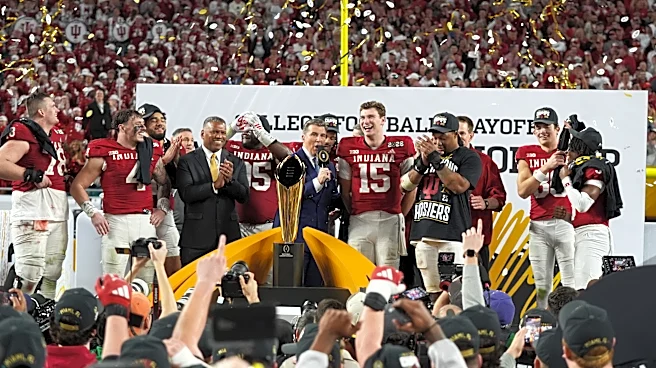
between games. These changes aim to conclude the season by the second Monday in January, aligning more closely with the academic calendar. The proposal follows the NCAA's Football Oversight Committee's suggestion to start the regular season earlier, beginning in 2027. The AFCA's plan is motivated by the need to accommodate the transfer portal window and reduce lag time between postseason games, as seen in the extended breaks during the recent College Football Playoff (CFP).
Why It's Important?
The proposed changes by the AFCA could have a significant impact on college football's structure and scheduling. By eliminating conference championship games and reducing the season's length, the AFCA aims to better align the football calendar with academic schedules, potentially benefiting student-athletes. This could also streamline the postseason, making it more efficient and reducing player fatigue. The changes may influence revenue streams for universities, as conference championship games have been a staple since the early 1990s. The proposal reflects a broader trend towards expanding the CFP, which could increase participation and viewership, potentially leading to greater financial gains for participating schools.
What's Next?
If the AFCA's proposals gain traction, discussions among NCAA officials, conference leaders, and university administrators will likely intensify. The potential elimination of conference championship games could face resistance from those who view them as traditional and financially beneficial. However, the push for a more streamlined and academically aligned season may garner support from educational institutions and student-athletes. The AFCA's recommendations could lead to further dialogue about expanding the CFP, with models ranging from 16 to 24 teams being considered. The outcome of these discussions could reshape the future of college football.