



What's Happening?
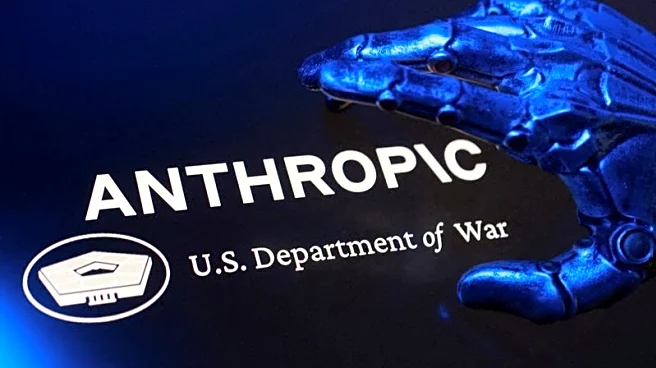
A federal judge in San Francisco is scrutinizing the Pentagon's decision to label Anthropic, a Silicon Valley AI company, as a security threat. The designation arose from a dispute over the use of Anthropic's AI technology in military applications, specifically
its deployment in autonomous weapons and surveillance. During a court hearing, Judge Rita Lin questioned the Trump administration's motives, suggesting the actions may not align with national security concerns. Anthropic has filed a lawsuit against the administration, claiming the label was part of an unlawful retaliation campaign. The judge has requested further evidence and is expected to rule on the matter soon.
Why It's Important?
The case highlights the growing tension between technology companies and government agencies over the use of AI in military and surveillance contexts. The outcome could set a precedent for how AI technologies are regulated and deployed in national security operations. It also raises broader questions about the balance between innovation and security, as well as the ethical implications of AI in warfare. The dispute reflects the challenges of integrating rapidly evolving technologies into existing legal and regulatory frameworks, and the potential impact on the tech industry's relationship with the government.
What's Next?
The judge's forthcoming decision could influence the future of AI regulation and its application in military contexts. A ruling in favor of Anthropic may lead to increased scrutiny of government actions against tech companies and potentially alter how AI technologies are classified as security risks. The case may also prompt legislative or policy changes to address the use of AI in national security, balancing innovation with ethical considerations. Stakeholders in the tech industry and government will likely be closely watching the outcome, which could have significant implications for future collaborations and conflicts.