



What's Happening?
AMSBIO, a life sciences company based in Oxford, UK, has launched the RPMotion, a spinning organoid bioreactor designed to improve the efficiency of organoid culture. This new technology addresses the limitations of traditional static organoid expansion
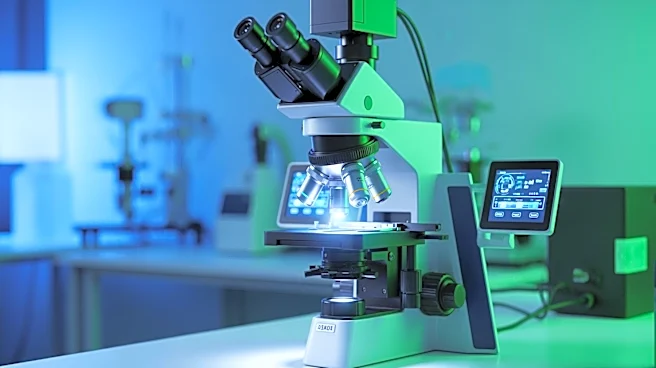
methods, which are often costly and labor-intensive. The RPMotion bioreactor allows for automated small-scale expansion and differentiation of organoids, achieving a five-fold increase in expansion speed compared to existing methods. It also reduces the cost of culture ingredients by 60% and labor use by 75%. The bioreactor is equipped with an intuitive LCD screen for easy operation and can run multiple experiments simultaneously, making it suitable for drug discovery, disease modeling, and regenerative medicine.
Why It's Important?
The introduction of the RPMotion bioreactor represents a significant advancement in the field of organoid research, which is crucial for drug discovery and regenerative medicine. By streamlining the organoid culture process, this technology can accelerate research timelines and reduce costs, making it more accessible to laboratories with limited resources. The ability to produce high-quality, consistent organoids is essential for developing reliable disease models and testing new therapies. This innovation could lead to faster development of treatments and a better understanding of complex diseases, ultimately benefiting patients and healthcare systems.
What's Next?
As the RPMotion bioreactor becomes more widely adopted, it may lead to increased collaboration between academic institutions, biotech companies, and pharmaceutical firms. Researchers will likely explore new applications for organoids in various fields, potentially leading to breakthroughs in personalized medicine and tissue engineering. AMSBIO may continue to refine and expand its product offerings to meet the evolving needs of the scientific community, further solidifying its position as a leader in life sciences innovation.