




What's Happening?
Japan has committed to a landmark strategic investment agreement with the United States, totaling $550 billion. This investment is set to be deployed by January 2029 and focuses on four primary sectors: energy, AI infrastructure, power generation for
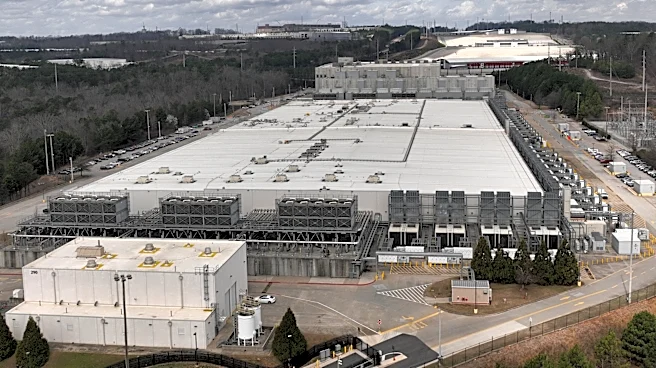
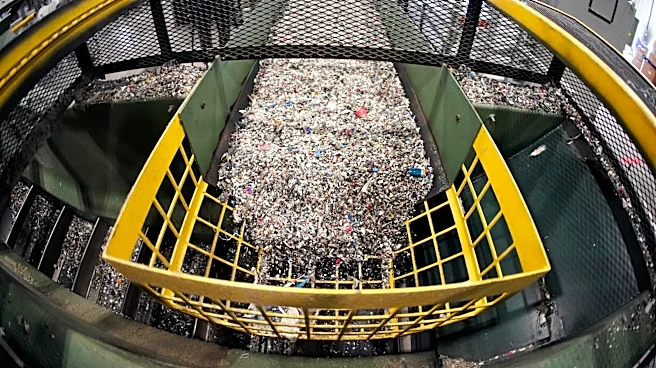
AI-related uses, and critical minerals. The first tranche of projects, announced on February 17, 2026, includes a $33 billion gas-fired power generation project in Ohio, a $2.1 billion crude oil export infrastructure facility in Texas, and a $600 million synthetic industrial diamond manufacturing plant in Georgia. The second tranche directs $73 billion toward energy infrastructure, including small modular reactor construction and gas generation projects. This investment represents a significant opportunity for the U.S. insurance market, demanding more from brokers and carriers as they support large-scale projects across various sectors.
Why It's Important?
The $550 billion investment from Japan is poised to transform the U.S. insurance market by introducing new sources of complex, high-value risk. As the U.S. property and casualty market enters a softening cycle, this influx of large-account, multi-line opportunities is crucial. The investment will require comprehensive insurance coverage across construction, operational property, workers' compensation, and liability lines. Japanese multinationals involved in these projects will also need directors' and officers' cover, political risk, and trade credit insurance. The scale of these projects demands a risk-reflective approach, integrating risk mitigation and prevention strategies to create lasting value. This investment cycle offers a unique chance for insurers to build relationships with Japanese corporate clients and support them as the programs go live.
What's Next?
The second tranche of Japan's investment focuses heavily on nuclear and gas generation, requiring deep specialist expertise and risk engineering capabilities. Small modular reactor (SMR) technology presents a novel challenge, with risk profiles for next-generation reactor designs still being modeled. Insurance programs for these projects will need to be built from the ground up. The broader market will benefit from the cascade of associated risks these programs generate, spanning construction, property, liability, and workers' compensation. As the capital begins to move, insurers must prepare to support these complex infrastructure projects, engaging at the design stage and bringing risk engineering expertise to the table.
Beyond the Headlines
The investment from Japan highlights the evolving approach of insurers towards complex risks, moving beyond pure risk transfer to integrate risk mitigation and prevention. This shift is crucial for infrastructure projects that will operate for decades, facing a risk environment that differs from past models. Japanese corporate clients, known for their long-term planning and disciplined capital stewardship, will expect their insurance partners to engage proactively, offering risk engineering expertise before ground is broken. This cultural expectation aligns with the broader evolution in the insurance industry, emphasizing the creation of lasting value through proactive risk management.