


What's Happening?
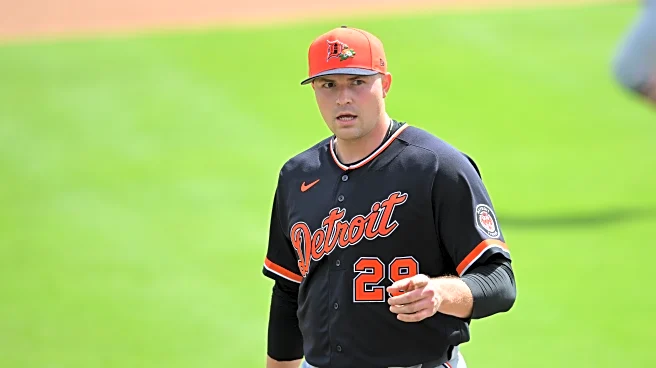
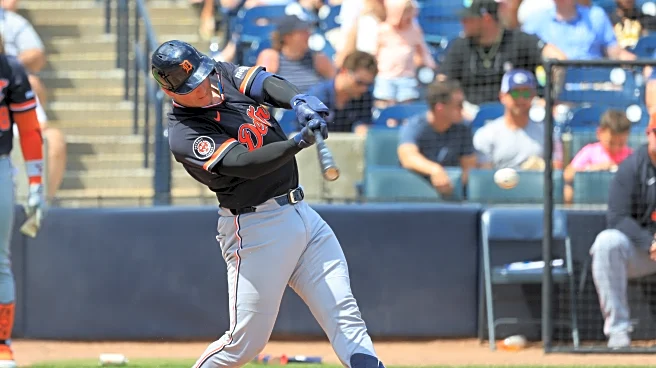
Kevin McGonigle, ranked as the No. 2 prospect in baseball, has been named to the Detroit Tigers' Opening Day roster for the 2026 season. At 21 years old, McGonigle is set to start as a shortstop when the Tigers face the San Diego Padres. Drafted 37th
overall in the 2023 MLB Draft, McGonigle has quickly ascended through the minor leagues, playing most of his first professional season at Single-A before moving to Double-A. Notably, he will make his major league debut without having played in Triple-A, a rare achievement last seen with Steven Moya in 2014. During spring training, McGonigle impressed with a .250/.423/.500 slash line, hitting two home runs and driving in six runs over 52 plate appearances. His performance earned praise from Tigers manager A.J. Hinch, who highlighted McGonigle's defensive skills and ability to handle pressure.
Why It's Important?
McGonigle's rapid rise to the major leagues underscores the Detroit Tigers' commitment to developing homegrown talent. His inclusion in the Opening Day lineup reflects the team's confidence in his abilities and potential to contribute immediately. This move could signal a shift in the Tigers' strategy, focusing on nurturing young prospects to revitalize the team. For McGonigle, this opportunity marks a significant milestone in his career, offering him a platform to showcase his skills on a larger stage. His success could inspire other young athletes and influence the Tigers' future roster decisions, potentially impacting the team's performance in the upcoming season.
What's Next?
As McGonigle prepares for his major league debut, all eyes will be on his performance in the early games of the season. The Tigers will likely monitor his progress closely, adjusting his role as needed to maximize his development and impact. Fans and analysts will be keen to see how McGonigle adapts to the challenges of major league play, particularly given his limited experience at higher minor league levels. His performance could influence the Tigers' strategy in nurturing other prospects, potentially leading to more young players bypassing Triple-A in the future.