







What's Happening?
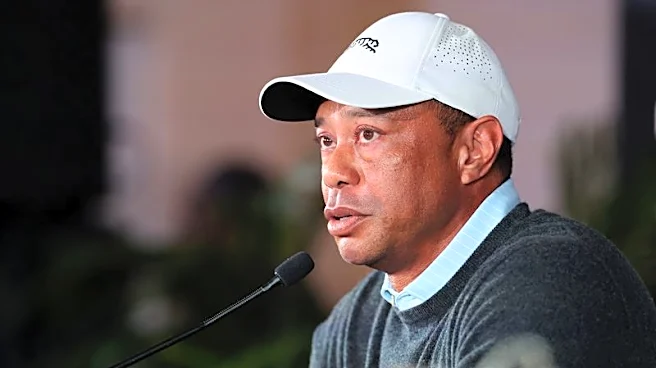
Tiger Woods is notably absent from the 2026 Masters Tournament following his arrest for driving under the influence. The incident occurred on March 27 when Woods' vehicle struck a trailer and flipped, leading to his arrest after refusing a urine test.
Jason Day, a fellow golfer, expressed disappointment over Woods' decision to drive under the influence, highlighting the potential danger to others. This marks the second consecutive year Woods has missed the Masters, previously due to an Achilles tendon injury. Woods has entered a plea of not guilty and is seeking treatment abroad. His absence has sparked discussions about his personal struggles and the pressures of his public life.
Why It's Important?
Tiger Woods is a significant figure in golf, and his absence from the Masters is a major talking point. His situation underscores the challenges athletes face with public scrutiny and personal issues. Woods' legal and personal battles could impact his career and legacy, influencing public perception and sponsorships. The incident also raises broader questions about athlete conduct and the responsibilities of public figures. Woods' situation may prompt discussions on support systems for athletes dealing with personal challenges.
What's Next?
Woods is currently seeking treatment, and his future participation in golf remains uncertain. The outcome of his legal proceedings and rehabilitation will be closely watched by fans and the golfing community. His return to the sport, if it happens, will be a significant event, potentially affecting tournament dynamics and viewership. The golfing world will also be observing how Woods' situation influences policies and support for athletes facing similar issues.