



What's Happening?
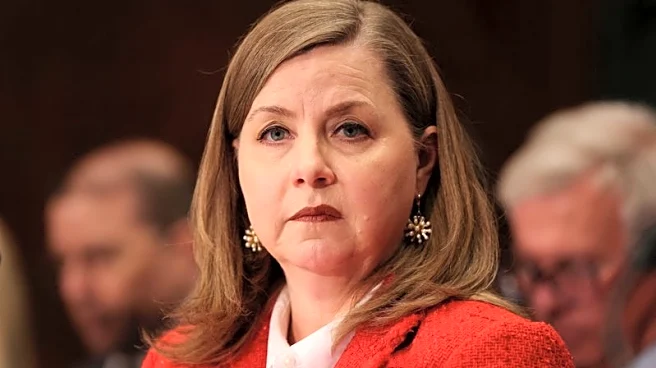
Federal Reserve Governor Christopher Waller has expressed a cautious stance regarding potential interest rate cuts, citing recent developments in the labor market and the ongoing conflict in Iran as reasons for a conservative approach. In a CNBC interview,
Waller indicated that while he previously supported rate cuts, the current economic conditions necessitate a wait-and-see strategy. He noted that the labor market's weakness, characterized by a lack of job growth and a decline in nonfarm payrolls, is a significant concern. Despite these challenges, Waller remains open to advocating for rate cuts later in the year if the labor market continues to weaken and inflation remains under control.
Why It's Important?
Waller's cautious approach highlights the Federal Reserve's balancing act between supporting economic growth and managing inflation. The decision to hold off on immediate rate cuts reflects concerns about the potential impact of the Iran conflict on energy prices and the broader economy. This stance could influence market expectations and investor confidence, as the possibility of rate cuts later in the year remains contingent on economic developments. The Federal Reserve's actions are closely watched by businesses and consumers, as interest rates affect borrowing costs, investment decisions, and overall economic activity.
What's Next?
The Federal Reserve will continue to monitor economic indicators, particularly the labor market and inflation trends, to determine the appropriate timing for any future rate cuts. Stakeholders, including businesses and policymakers, will be keenly observing the Fed's decisions, as these will have significant implications for economic stability and growth. The ongoing conflict in Iran and its impact on energy prices will also be a critical factor in shaping the Fed's monetary policy in the coming months.