



What's Happening?
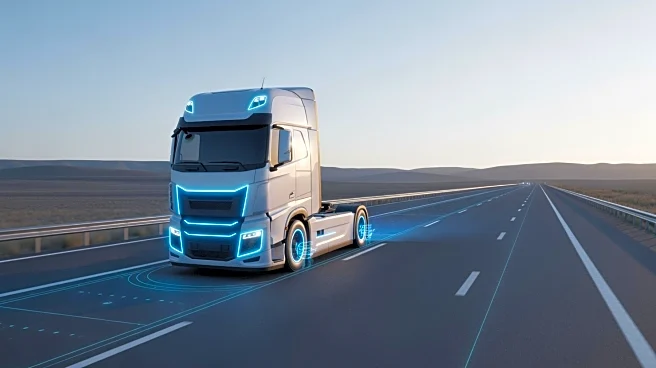
Einride, a self-driving truck company, is set to use the Texas 130 toll road as a testing ground for its cabless autonomous freight vehicles. The partnership with SH 130 Concession Co. aims to establish the toll road, which connects Austin and San Antonio,
as a corridor for autonomous freight operations. Einride, founded in 2016, operates a fleet of about 200 autonomous and electric trucks and has a zero-traffic incident safety record. The toll road, known for its high speed limit of 85 mph, recorded over 12.6 million transactions in 2023. The collaboration includes plans for a next-generation rest stop with high-capacity EV charging and specialized docking for the autonomous trucks. Additionally, the integration of Einride's optimization software with SH 130 Concession's digital ecosystem is being explored to enhance data sharing and traffic management.
Why It's Important?
This development marks a significant step in the advancement of autonomous freight technology in the U.S. By using a major toll road as a testing ground, Einride and SH 130 Concession Co. are positioning Texas as a hub for autonomous vehicle innovation. The initiative could lead to increased efficiency and safety in freight transportation, potentially reducing congestion on traditional routes like Interstate 35. The project also highlights the growing importance of infrastructure adaptation to accommodate new transportation technologies, which could influence future policy and regulatory frameworks. Stakeholders in the logistics and transportation sectors stand to benefit from the successful implementation of such technologies, which promise to streamline operations and reduce costs.
What's Next?
The partnership will focus on the practical implementation of autonomous freight operations, including the construction of the next-generation rest stop and the integration of advanced software systems. As the project progresses, it may attract attention from regulators and policymakers, who will need to address the implications of increased autonomous vehicle usage on public roads. The success of this initiative could pave the way for similar projects across the country, potentially transforming the landscape of freight transportation in the U.S.