
What's Happening?
Hannah Bradfield successfully completed her first marathon in under four hours by employing a strategic fuelling plan. Her approach involved using glucose data to fine-tune her nutrition, avoiding energy
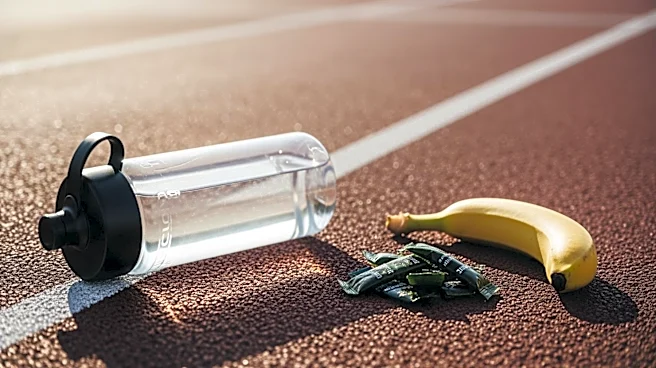
crashes during the race. Bradfield alternated between non-caffeine and caffeine energy gels, consumed gradually to prevent gastrointestinal distress. She also carried electrolytes in a hydration vest to maintain hydration throughout the race. Her training plan focused on pacing and building endurance, allowing her to achieve her goal time of 3:58:36.
Why It's Important?
Bradfield's experience highlights the importance of personalized nutrition and strategic planning in endurance sports. Her success demonstrates that a well-thought-out fuelling strategy can significantly impact performance, especially in long-distance events like marathons. This approach can serve as a model for other athletes seeking to optimize their performance through nutrition. Understanding the role of glucose management and hydration in athletic performance can lead to better outcomes and reduce the risk of fatigue and injury.
What's Next?
As more athletes recognize the benefits of personalized nutrition, there may be increased interest in using technology like continuous glucose monitors to inform training and race strategies. Sports nutritionists and coaches may explore new methods to optimize fuelling plans for endurance events. Additionally, the success of athletes like Bradfield could inspire others to pursue marathon running, contributing to the growth of the sport and the development of innovative training and nutrition techniques.