





What's Happening?
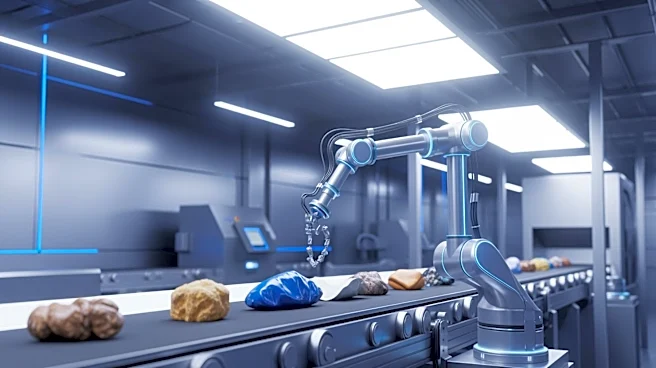
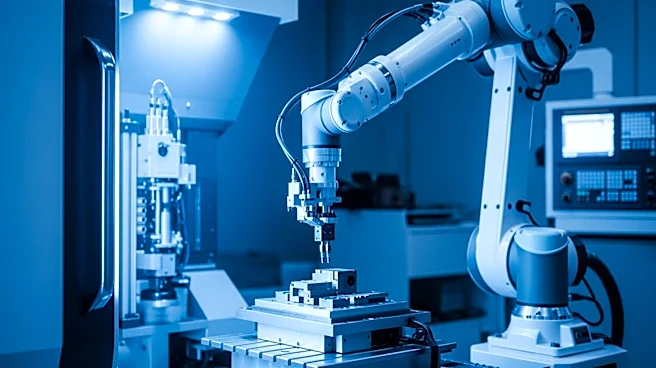
Robotic arms are increasingly being integrated with CNC machines, transforming manufacturing processes by enabling autonomous operations. Companies like FANUC, Universal Robots, KUKA, ABB, and RoboDK are leading this integration, allowing robotic arms to perform
tasks such as loading raw materials, transferring parts between machines, and conducting in-process inspections without human intervention. This development addresses labor shortages and enhances production efficiency by enabling 'lights-out' manufacturing, where machines operate autonomously outside of staffed hours. The integration of robotic arms with CNC machines represents a significant shift from single-task automation to full production integration, reducing reliance on manual labor and increasing consistency in manufacturing outputs.
Why It's Important?
The integration of robotic arms with CNC machines is crucial in addressing the skills gap in the manufacturing industry, where a significant number of positions remain unfilled. By automating repetitive and labor-intensive tasks, manufacturers can maintain high production levels and reduce operational costs. This shift not only improves efficiency but also allows for more consistent product quality by eliminating human error associated with manual operations. As the demand for precision and efficiency in manufacturing grows, the adoption of robotic arms in CNC operations is likely to become more widespread, reshaping the industry's labor dynamics and production capabilities.
What's Next?
As robotic arms continue to be integrated with CNC machines, the focus will shift towards enhancing their capabilities through artificial intelligence. Future developments may include robots that can autonomously monitor spindle loads, detect tool wear, and make real-time decisions about part quality. This evolution will further reduce the need for human oversight and increase the autonomy of manufacturing processes. Companies will need to invest in training and infrastructure to support these advanced systems, potentially leading to a new era of manufacturing where human roles are redefined to complement automated processes.