
What's Happening?
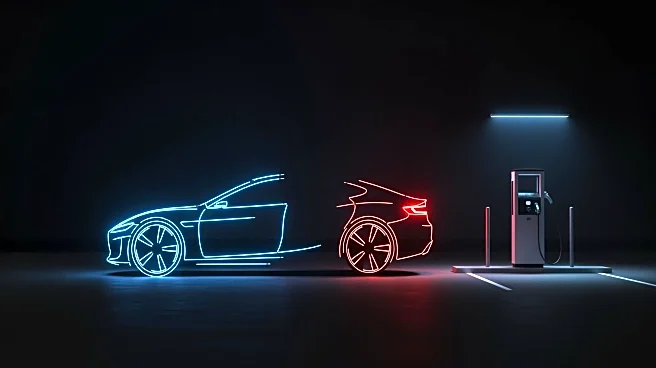
Honda has announced the cancellation of its Zero Series SUV and Saloon, as well as the Acura RSX EVs, due to an 'extremely challenging earnings situation.' The Japanese automaker is facing a projected net loss of between ¥360 billion (~$2.5 billion) and ¥630
billion (~$4.4 billion) for the fiscal year ending this month, marking its first annual loss since becoming a public company 50 years ago. The company had been aggressively pursuing electric vehicles (EVs), with plans for 30 new EVs by 2030 and a goal of 100% zero-emission auto sales by 2040. However, Honda is now recording a significant loss on its EV investments, ranging from ¥340 billion to ¥570 billion ($2.14 billion to $3.58 billion). The decision to cancel these EVs is attributed to declining demand and a challenging business environment.
Why It's Important?
The cancellation of Honda's Zero Series EVs highlights the broader challenges facing the automotive industry, particularly in the EV sector. Despite ambitious plans for electrification, Honda's financial struggles underscore the difficulties automakers face in transitioning to electric vehicles amid fluctuating market demands and competitive pressures, especially from Chinese manufacturers. This development also reflects the impact of President Trump's tariffs, which have added financial strain to automakers. The situation is indicative of a larger trend, as other major companies like Ford, GM, and Stellantis have also reported substantial financial hits related to their EV investments. The shift away from EVs towards hybrids by Honda may signal a strategic pivot in response to current market conditions.
What's Next?
Honda's decision to focus more on hybrid vehicles suggests a strategic shift that could influence other automakers facing similar challenges. The company may need to reassess its long-term goals for electrification and carbon neutrality. Additionally, the broader automotive industry may see increased competition and innovation as companies strive to balance financial viability with environmental commitments. Stakeholders, including investors and environmental advocates, will likely monitor Honda's next moves closely, as they could set a precedent for how traditional automakers navigate the evolving landscape of vehicle electrification.