




What's Happening?
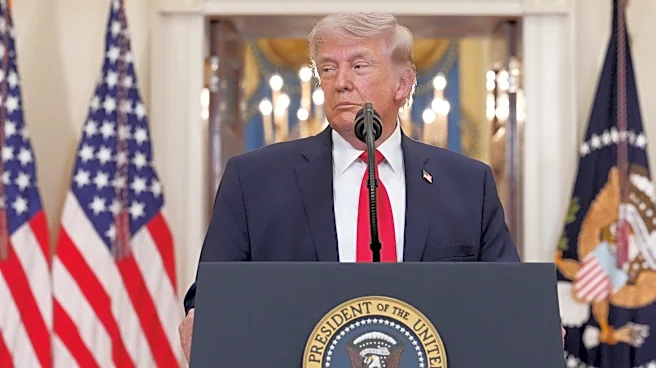
President Trump has signed an executive order that could significantly impact women's collegiate sports, particularly college softball. The order, announced by the White House, introduces regulations that affect athlete transfer movements, player eligibility,
and funding requirements for women's and Olympic sports. The executive order mandates that schools maintain a certain level of funding for these sports, addressing concerns that resources are being disproportionately allocated to football and men's basketball. The order also proposes a return to a 'one-time transfer' policy, limiting student-athletes to a five-year participation window, with exceptions for military and missionary service. NCAA President Charlie Baker responded positively, noting that the order aligns with the NCAA's efforts to modernize college sports and provide more benefits to student-athletes.
Why It's Important?
This executive order could have far-reaching implications for college sports, particularly for non-revenue sports like women's and Olympic sports. By enforcing funding requirements, the order seeks to protect these programs from being overshadowed by more lucrative sports. The transfer policy changes aim to stabilize the college sports landscape, potentially reducing the frequency of athlete transfers and maintaining competitive balance. The order's emphasis on funding and eligibility could ensure that women's sports receive the necessary support to thrive, promoting gender equity in collegiate athletics. However, the implementation of these changes may face challenges, as schools and athletic programs adjust to the new regulations.
What's Next?
The executive order is set to be implemented by August 1, 2026, ahead of the next school year. This timeline gives schools and athletic programs a limited window to comply with the new regulations. The NCAA and other stakeholders will likely engage in discussions to address any concerns and ensure a smooth transition. The order may also prompt legislative action, as the NCAA and the administration work towards a permanent, bipartisan solution to stabilize college athletics. The response from colleges, athletic directors, and student-athletes will be crucial in shaping the future of these regulations.