


What's Happening?
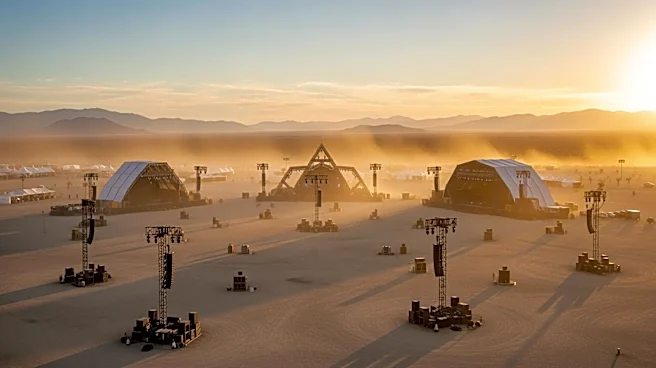
The Coachella Valley Music and Arts Festival in 2026 is concluding its second weekend with a lineup featuring over 150 performers, including major acts like Justin Bieber, Karol G, and Sabrina Carpenter. The festival, held at the Empire Polo Club in Indio,
California, has attracted approximately 125,000 attendees. This year, Coachella has introduced several new features for its global audience, including 4K livestreaming of performances on YouTube, a multiview option to watch up to four stages simultaneously, and a 24/7 Coachella TV feed showcasing past and current performances. Notable performances include Justin Bieber's return to the stage after a four-year hiatus due to health issues, and Karol G's historic appearance as the first Latina headliner. The festival also features a diverse range of artists, from pop to reggaeton, and includes performances by The Strokes, The xx, and Iggy Pop.
Why It's Important?
Coachella 2026's innovations in livestreaming technology and its diverse lineup highlight the festival's ongoing influence in the music industry. By offering 4K streaming and multiview options, Coachella enhances the virtual experience for global audiences, potentially setting a new standard for music festivals worldwide. The inclusion of artists like Karol G as a headliner reflects a growing recognition and celebration of diverse musical genres and cultural backgrounds. This shift not only broadens the festival's appeal but also underscores the increasing importance of representation in the entertainment industry. The festival's ability to attract top-tier talent and large audiences, both in-person and online, reinforces its status as a premier cultural event with significant economic and social impact.
What's Next?
As Coachella 2026 wraps up, the festival's success in integrating advanced streaming technologies may influence future events, encouraging other festivals to adopt similar innovations. The positive reception of diverse headliners could lead to more inclusive lineups in subsequent years, further diversifying the music festival landscape. Additionally, the festival's economic impact on the local community and its role in shaping music trends will likely be analyzed, providing insights for future planning and development. Stakeholders, including artists, sponsors, and local businesses, may explore new opportunities for collaboration and growth based on the festival's outcomes.