



What's Happening?
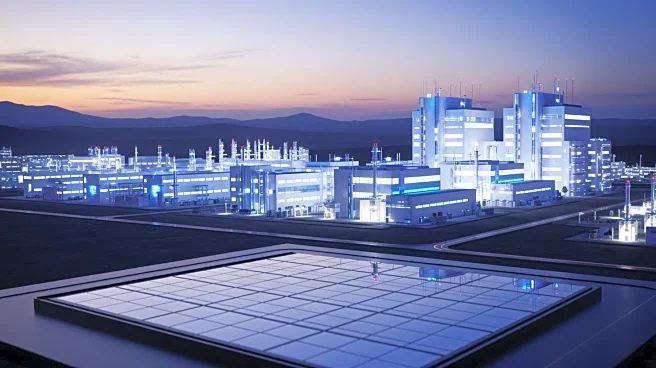
Elon Musk has announced the launch of the Terafab project, a chip manufacturing facility to be built in Austin, Texas. This initiative, jointly managed by Tesla and SpaceX, aims to produce chips for robotics, artificial intelligence, and space data centers.
Musk highlighted the need for this facility due to the slow pace of the current semiconductor industry, which he believes cannot meet the demand for chips required by his companies. The project will start with an advanced technology fab capable of producing various types of chips, with plans to eventually support a terawatt of computing power annually. The facility is expected to produce two types of chips: one optimized for edge and inference, and another high-power chip for space applications.
Why It's Important?
The Terafab project is significant as it represents a major step in addressing the global chip shortage, particularly for industries reliant on advanced computing power. By establishing a domestic chip manufacturing facility, Musk aims to reduce dependency on external suppliers and enhance the technological capabilities of Tesla and SpaceX. This move could position Texas as a key player in the semiconductor industry, potentially attracting further investments and boosting the local economy. Additionally, the project aligns with Musk's broader vision of advancing AI and space technologies, which could have far-reaching implications for various sectors, including automotive, aerospace, and telecommunications.
What's Next?
The next steps for the Terafab project involve the construction and operationalization of the facility in Austin. Musk has not provided specific timelines for the project's completion, but the initiative is expected to progress in phases, starting with a smaller scale fab. The success of this project could lead to further expansion and the development of additional facilities. Stakeholders, including Texas Governor Greg Abbott, have shown support for the project, which could influence future policy decisions and investments in the region. As the project unfolds, it will be crucial to monitor its impact on the semiconductor industry and its ability to meet the growing demand for advanced chips.