



What's Happening?
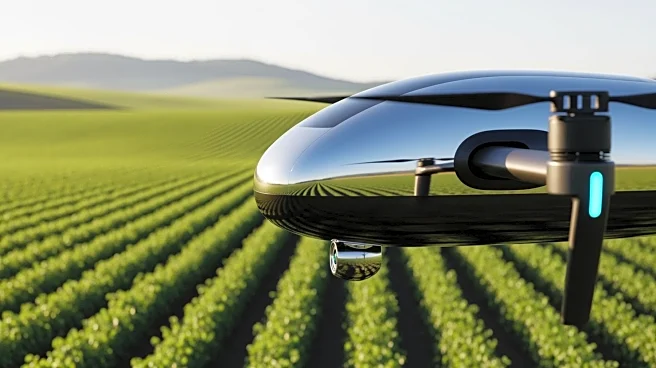
Major technology companies such as Google, Microsoft, Amazon, and Alibaba are increasingly integrating artificial intelligence (AI) into agriculture, promising enhanced efficiency and precision in food production. These advancements, however, come with
significant environmental and political costs, as they require substantial energy and water resources. A report by IPES-Food highlights the potential risks of these developments, particularly for small farmers who may face increased costs and reduced autonomy due to reliance on expensive digital infrastructure and private services. The report warns that partnerships between Big Tech and large agribusiness corporations could further concentrate control over the food system, potentially widening the gap between large corporations and small farmers.
Why It's Important?
The integration of AI in agriculture could revolutionize food production by increasing efficiency and resilience against climate change. However, the growing influence of tech giants in this sector raises concerns about the concentration of power and the potential marginalization of small farmers. As these companies control more data and decision-making processes, small producers may become increasingly dependent on platforms they do not control, leading to higher operational costs and less autonomy. This shift could exacerbate existing inequalities in the agricultural sector, particularly affecting small farmers in the Global South who may lack the capital and digital infrastructure to compete.
What's Next?
The report suggests that public policies should support farmer-led seed systems and decentralized solutions to counterbalance the influence of large corporations. Initiatives in regions like the Peruvian Andes and China demonstrate the potential for local communities to maintain autonomy and preserve biodiversity. As the digitalization of agriculture continues, it will be crucial to ensure that small farmers are not left behind and that their needs are considered in the development of new technologies.
Beyond the Headlines
The push towards digital agriculture could lead to a technological 'lockdown,' where farmers become locked into specific platforms and technologies, making it difficult and costly to switch suppliers. This could further entrench monoculture practices, reducing biodiversity and increasing vulnerability to pests and diseases. The report calls for a reevaluation of the business models supporting these technologies to ensure they do not undermine the autonomy and sustainability of small-scale farming.